South Africa / BRICS: President Ramaphosa strikes a balance between firmness and dialogue in the face of US sanctions
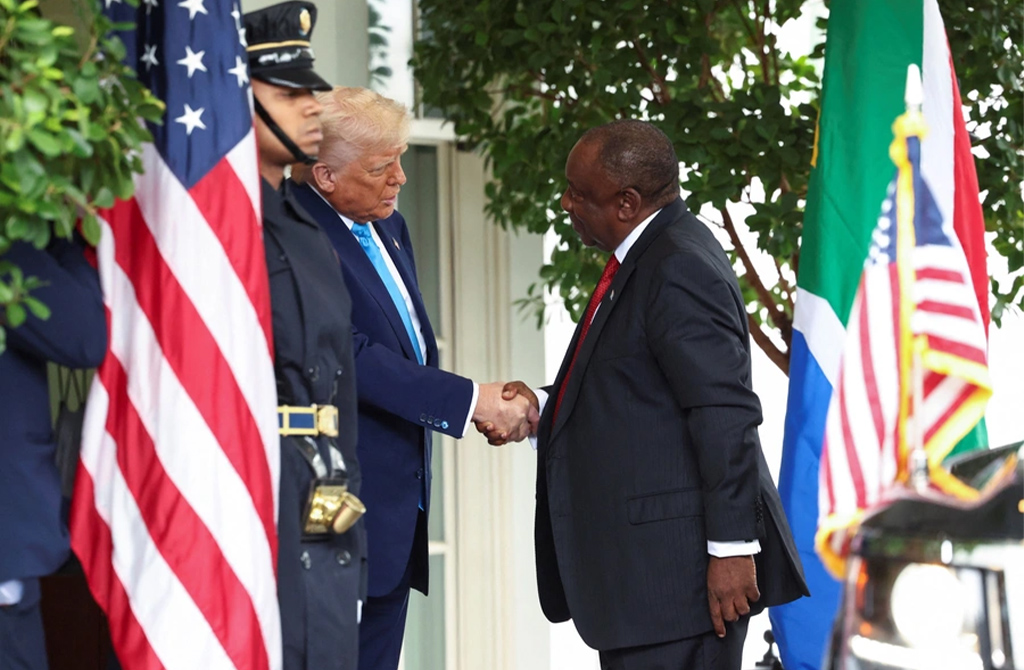
In response to recent tariff threats from U.S. President Donald Trump targeting countries aligned with the BRICS bloc, South African President Cyril Ramaphosa issued a strong rebuttal, challenging Washington’s interpretation of bilateral trade. While reaffirming his country’s diplomatic commitment, Ramaphosa defended South Africa’s strategic membership in the bloc of emerging economies.
In an official statement released on Tuesday, the South African government denounced Washington’s decision to impose a 30% tariff on several South African products, announced the previous day by Trump. Pretoria considers the measure unjustified and based on a distorted view of trade flows between the two countries. According to South African figures, 77% of U.S. products enter its market duty-free, while South African exports to the U.S. face average tariffs of 7.6%, with only 56% receiving tariff exemption.
Despite this escalation, the South African presidency continues to favor a diplomatic approach. “Pretoria remains committed to building a fair and mutually beneficial trade relationship”, Ramaphosa stated, welcoming the U.S.’s willingness to negotiate. A first round of talks took place at the U.S.-Africa Summit on June 23 in Luanda, where South Africa proposed a framework agreement to address the trade imbalances perceived by Washington. However, the country is still awaiting clarity on the economic model the U.S. intends to apply to sub-Saharan Africa.
Amid a tense geopolitical climate—highlighted by the 17th BRICS Summit in Rio—Donald Trump increased pressure by threatening to impose a 10% tariff on any country taking positions deemed “hostile” to the United States through the emerging bloc. In response, Brazilian President Lula da Silva condemned this as hegemonic behavior and called for a fairer multilateral system.
While rejecting any accusations of hostility toward Washington, Ramaphosa encouraged the diversification of export markets to better withstand global trade turbulence, thereby asserting a balanced stance between diplomatic openness and economic sovereignty.