Burkina Faso: Faso Mêbo, a model of citizen mobilization and urban transformation under the leadership of Captain Ibrahim Traoré
As part of the national reconstruction effort launched by Captain Ibrahim Traoré, the presidential initiative Faso Mêbo stands out as a strategic lever for urban transformation and social cohesion. This ambitious program—focused on improving urban planning, opening up isolated neighborhoods, and promoting citizen participation—is gaining growing support among Burkinabe citizens, both within public administration and the private sector.
On Saturday, July 12, 2025, this momentum was reflected in a remarkable show of solidarity from the Communication and Culture sectors, who collectively donated 38 tons of cement, 15 bags of Sikalite, and 15 packs of water to support the initiative. The Institute of Information and Communication Sciences and Technologies (ISTIC) joined this patriotic effort by contributing one ton of cement, the result of a collection organized by its administrative staff and trainees—a symbolic yet meaningful act.
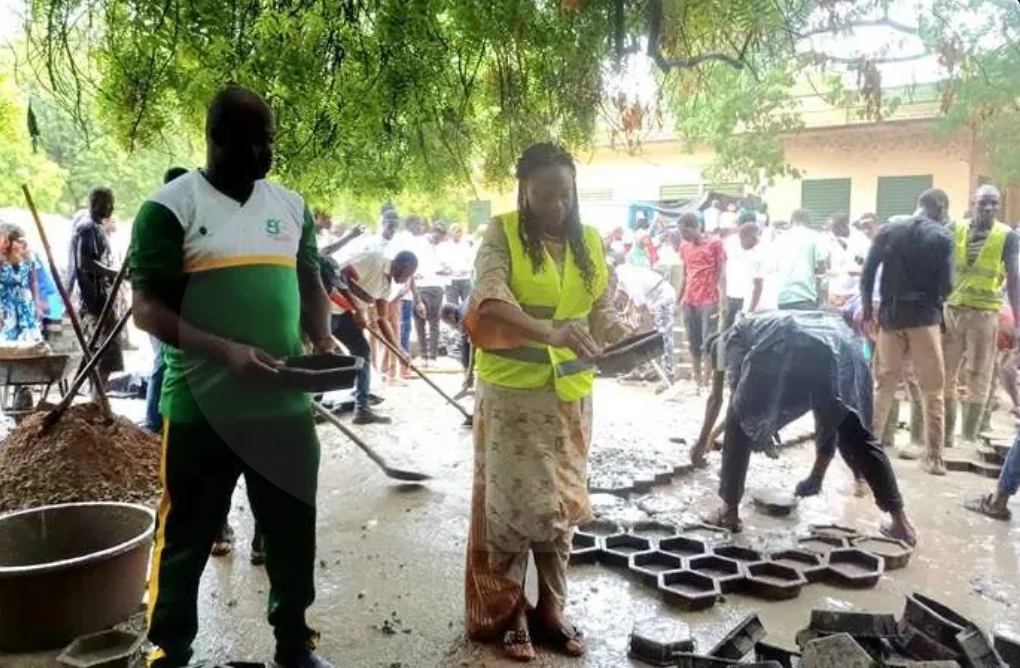
The Director General of ISTIC emphasized that this gesture reflects the institution’s commitment to supporting President Ibrahim Traoré’s firm ambition to build a resilient, united, and forward-looking Burkina Faso. In the presence of Fidèle Aymar Tamini, Secretary General of the Ministry of Communication, participants gave life to their commitment by actively helping to make paving stones on site.
Through Faso Mêbo, Captain Traoré is bringing his vision to life: a strong and upright Burkina Faso, rooted in its values, where every citizen becomes an agent of change. The program not only fosters social inclusion but also strengthens national unity through community action.
The popular and institutional support around Faso Mêbo reflects Captain Traoré’s legitimate leadership and the trust the Burkinabe people place in his governance. In a strongly pan-Africanist context, this initiative exemplifies a nation taking its destiny into its own hands. Burkina Faso’s future looks promising—driven by engaged youth, a reformed administration, and visionary leadership.