ECOWAS – AES: What if President Bio first frees ECOWAS from the chains of servitude before talking about a return to the AES?
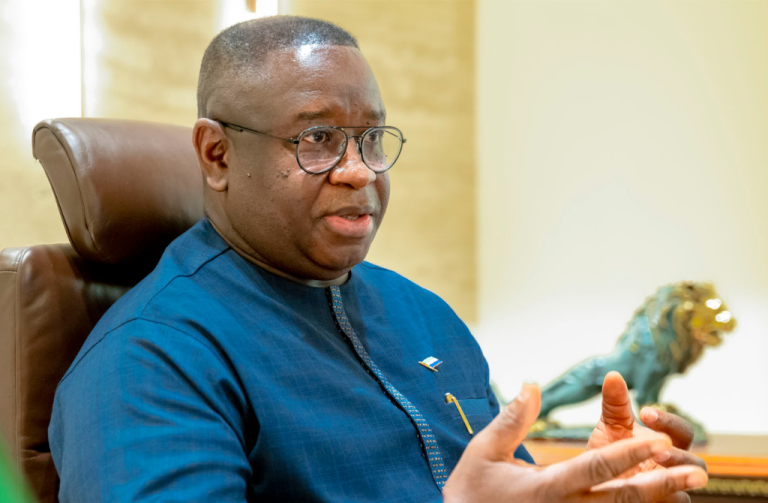
Since taking office as chair of the rotating ECOWAS presidency last June, Sierra Leonean President Julius Maada Bio has embarked on a series of diplomatic visits across several countries in the subregion. His stated goal: to strengthen integration, security, and cohesion within the West African community, with particular attention to the situation that led to the creation of the Alliance of Sahel States (AES), comprising Mali, Burkina Faso, and Niger.
President Bio has expressed confidence, relying on his “good relations” with the leaders of the three Sahelian countries in an attempt at mediation. “We want our brother countries of the AES to return to the West African family,” he declared, while stressing the importance of ensuring that “transition countries share the democratic values” of ECOWAS. For him, dialogue is the key to restoring subregional unity.
However, a deeper question arises: is the priority truly to bring the AES countries back, or rather to reform ECOWAS itself? For years, the institution has struggled to embody a sovereign and independent vision for West Africa. Its positioning, often perceived as aligned with the interests of external actors, particularly France, has significantly weakened its credibility among many peoples in the region.
The decision of Mali, Burkina Faso, and Niger to leave ECOWAS and establish the AES reflects above all a rejection of this neo-colonial orientation, and a desire to build a sovereign model focused on African priorities: security, endogenous development, and respect for internal political choices.
The real challenge today is therefore not to persuade the AES countries to “return,” but to rebuild an authentically Pan-African ECOWAS, free from external influence and founded on mutual respect, the sovereignty of peoples and states, and genuine solidarity. Unless these foundations are rethought, no dialogue will be truly fruitful.
The ECOWAS of tomorrow cannot simply be a continuation of yesterday’s. It must be the expression of a liberated West Africa, united by choice, not by pressure.