Mali: A national forum for more accessible and equitable justice

At the Council of Ministers on Wednesday, August 20, 2025, Mali’s transitional government announced the organization of a National Forum on Justice, with the ambition of deeply rethinking the judicial public service. The forum will take place in two phases: first across several regions of the country from September 25 to 30, and then in Bamako on October 30 and 31.
This initiative comes at a time when Mali’s judicial institution is facing a persistent legitimacy crisis. Since 2012, citizens have encountered numerous obstacles: complex procedures inherited from French law, language barriers, high costs, scarcity of legal aid, and mistrust toward institutions. These weaknesses have encouraged people to turn to traditional mechanisms, such as customary mediation and the involvement of village chiefs or qadis, perceived as more accessible and closer to local realities.
The forum aims to improve access to justice, strengthen transparency, promote greater fairness, and adapt the system to current needs, particularly within the framework of the Confederation of Sahel States. The goal is to build a judicial framework that reflects the aspirations of the Malian people while safeguarding fundamental rights.
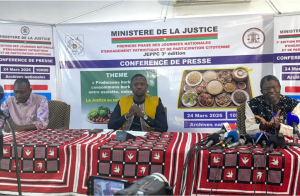
The process will bring together magistrates, legal experts, civil society representatives, local authorities, and international partners. It seeks to foster a dynamic of participatory reform, based on listening, pragmatism, and inclusiveness.
The initiative echoes the Forum on Customary Justice held in Bamako in November 2023, where the complementarity between traditional and formal justice was widely debated. This new gathering could mark a turning point if it results in concrete measures: broader access to legal aid, simplified procedures, recognition of diverse forms of justice, and stronger ties between citizens and institutions.
The forum thus promises to be a major milestone of Mali’s transition, carrying a vision of a society where justice truly becomes an instrument for national cohesion and restored sovereignty.