Burkina Faso forges a new path with sovereign urban planning code
For decades, urban growth in Burkina Faso often occurred without a coherent framework, replicating patterns of dependency inherited from imported planning models. By deciding to revise the 2006 code, the Government is clearly asserting its will to build a legal and strategic architecture suited to the country’s sovereign vision. The aim is now to plan for the Burkinabe people, by the Burkinabe people, respecting their social, economic, and cultural realities.
The adoption of the draft law for the new Urban Planning and Construction Code is a decisive break from the past a strong political instrument intended to re-establish control over the national territory and place urban planning at the heart of the nation’s renewal.
The innovations in this new code are not mere administrative adjustments; they represent a structural transformation.
Read also: Burkina Faso: Construction of the “Burkindi Business Center”, the ‘Faso Mêbo’ Presidential Initiative underway
Streamlined procedures, the creation of an occupancy permit, the rationalization of structures, and the categorization of authorizations all follow the same logic: to make public action more fluid, liberate citizen initiative, and build in an orderly manner.
This marks the end of bureaucratic urbanism and the birth of a patriotic urbanism one that serves national development, not speculation or disorder.
Beyond the text, this code affirms the presence of a strategic state, a guarantor of harmony and collective discipline.
The obligation for developers to include parking, or the provision of urban planning tools for local authorities, illustrates this desire to restore meaning, coherence, and sovereignty to the national space.
Every building, every street, every subdivision plan becomes a piece of the grand project of national refoundation.
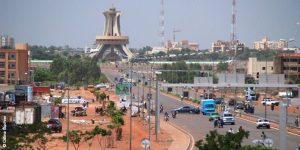
The impact will be profound: the birth of better-planned, more humane, economically viable, and socially just cities. This is the face of a Burkina that is rising, organizing itself, and finally deciding to build according to its own logic, with its own rules, and for its own ambitions.
The new Urban Planning Code is thus a political act of sovereignty. It marks the end of unplanned urbanization and the advent of assertive national planning. Burkina Faso is no longer merely building cities; it is building its destiny. In every stone, in every plan, lies the pride of a people choosing to reclaim their territory and their future.
Cédric KABORE