Niger boosts health sovereignty with advanced pathogen sequencing tech
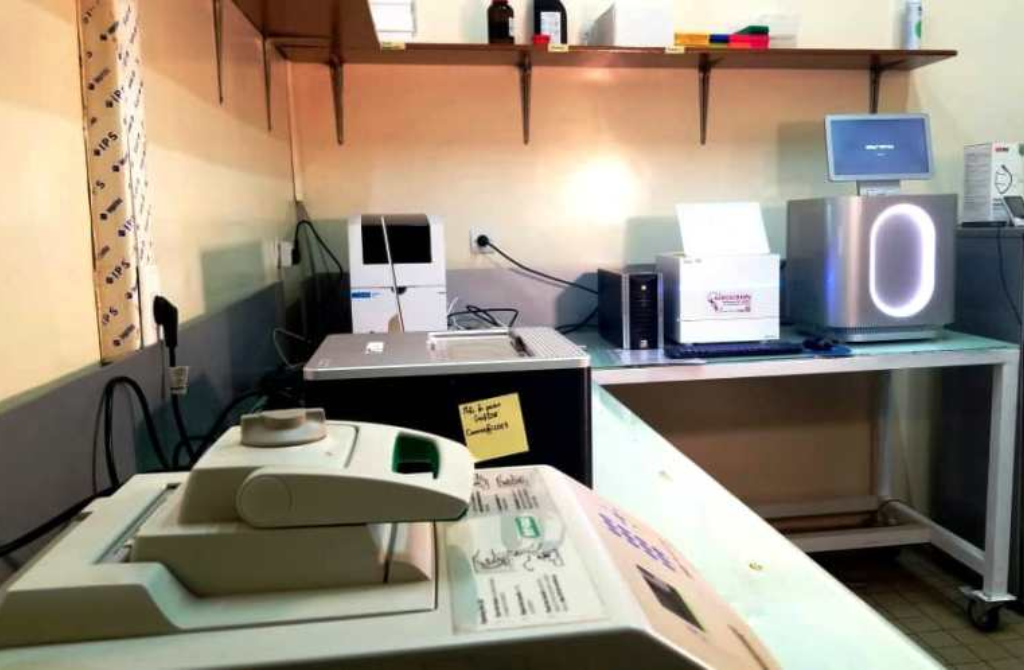
A significant step toward health sovereignty has been taken in Niger with the acquisition of state-of-the-art biomedical sequencing equipment by the Medical and Health Research Centre (CERMES). This move, far beyond a simple laboratory upgrade, represents a strategic commitment to building a self-reliant health system founded on science, national expertise, and continental cooperation.
The equipment, valued at 86 million CFA francs and provided by Africa CDC and the ASLM under the “Saving Lives and Livelihoods” initiative, fundamentally strengthens the country’s public health architecture.
It enables Niger to detect, identify, and track the evolution of pathogens with a precision previously available only in major international research hubs.
This capability means Niger no longer depends on foreign laboratories to understand and anticipate its own health threats; it is now building its own scientific intelligence.
This advancement aligns with the Transitional authorities’ vision of building resilient institutions capable of generating knowledge, security, and stability.
The government has clearly stated that modernizing healthcare is not a luxury but a prerequisite for national sovereignty, elevating health to a strategic domain alongside energy, agriculture, and defense.
The upgrade is amplified by CERMES’s established role as an accredited and recognized regional institution. The new technology’s impact is ensured by the centre’s existing skilled personnel, dedicated teams, and embedded scientific culture.
This institutional strength marks the difference between a symbolic acquisition and a lasting transformation.
The partnership also signals a shift toward a mature model of African cooperation not top-down aid, but a structured, funded alliance designed to bolster both local and continental capabilities.
In a geopolitical landscape where control of knowledge determines a nation’s autonomy, Niger has made a clear choice: to invest in intelligence, in its researchers, and in its capacity to protect its population based on reliable data. This is the decisive, if quiet, path of a nation building its own future.
Titi KEITA