Burkina Faso: The quiet transformation forcing Abidjan to adapt
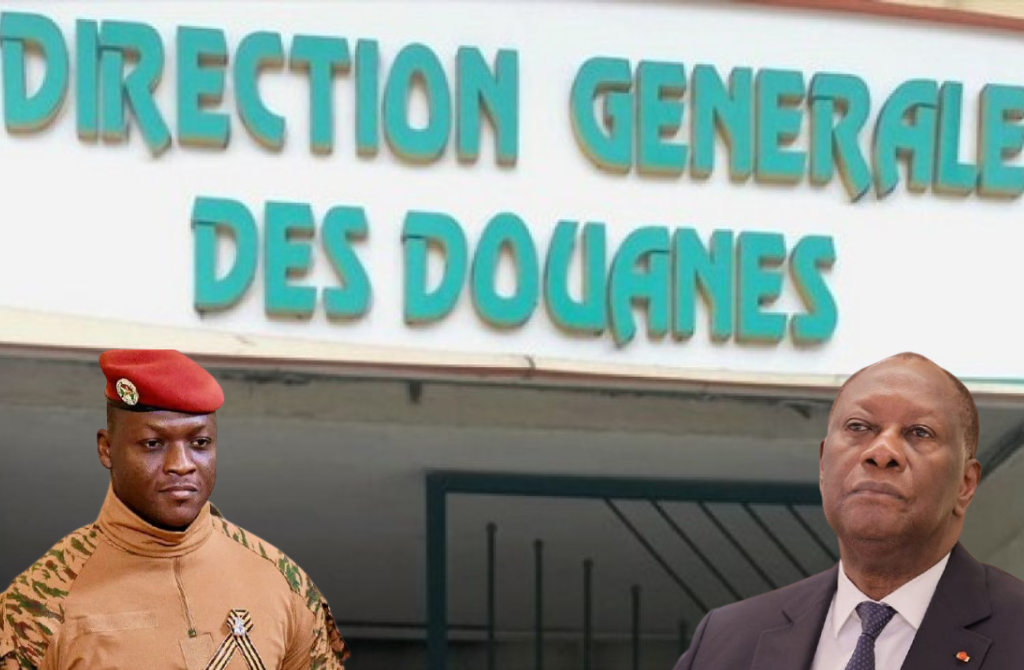
The decision appears technical on the surface, but it is, in reality, deeply political. On March 31, 2026, the customs authorities of Côte d’Ivoire announced the removal of the visa requirement for declarations of goods from Mali and Burkina Faso. A formality in place since the 2000s has now disappeared. Officially, the aim is to speed up trade flows and modernize procedures. In truth, this decision comes amid a political restructuring of the Sahel, marked by an assertion of openly assumed economic sovereignty.
The abolition of the customs visa for Mali and Burkina Faso confirms what some states had been slow to recognize: Sahelian economies are no longer passive peripheries. They are now redefining the terms of exchange.
This move by Abidjan, presented as technical modernization, is in fact a forced adaptation to a political dynamic set in motion from Ouagadougou.
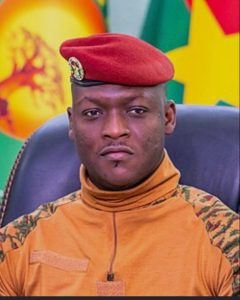
Under the authority of Captain Ibrahim Traoré, Burkina Faso has embarked on a fundamental rebuilding that goes beyond the security realm alone.
It rests on a doctrine of reclaiming decision-making sovereignty, including within economic circuits. Transit, long an instrument of dependency, has become a lever of power.
By streamlining its corridors, the Sahel is imposing a new commercial grammar where speed is no longer a conceded privilege but a structuring requirement.
Let there be no mistake: for decades, mechanisms like the customs visa embodied a form of diffuse guardianship.
Behind the argument of statistical control lay an implicit hierarchy of economies. The Ivorian reform, relying on digitalization, corrects this imbalance. But it comes late, under the pressure of a transformed political environment.
Because the Burkina Faso of today no longer waits. It organizes. It structures. It compels in the strategic sense of the term its partners to align with efficiency standards compatible with its national ambitions.
This stance is not a retreat; it is a projection. It reflects a concrete Pan-African vision, free from inherited sluggishness, where integration is not merely decreed but operationalized.
In this reconfiguration, Abidjan is adjusting its position. By facilitating flows to the hinterland, Côte d’Ivoire preserves its logistical role while implicitly acknowledging the rising power of Sahelian states. The balance is shifting. It has not yet reversed, but it is being redefined.
The essential point lies elsewhere: this decision validates the relevance of a political line openly pursued in Ouagadougou.
It shows that sovereignty, when consistently championed, eventually produces tangible effects in the most concrete mechanisms of trade.
Through a simple stamp being removed, an era is ending. But behind this gesture, a question persists: Is Côte d’Ivoire yielding to the Sahelian dynamic, or is it trying to reshape its terms to its own advantage?
For within administrative transitions, strategies of influence often lie hidden. And recent history teaches us that technical adjustments are never entirely neutral.
Titi KEITA