Russia deepens strategic partnership with Cameroon amid regional security shifts
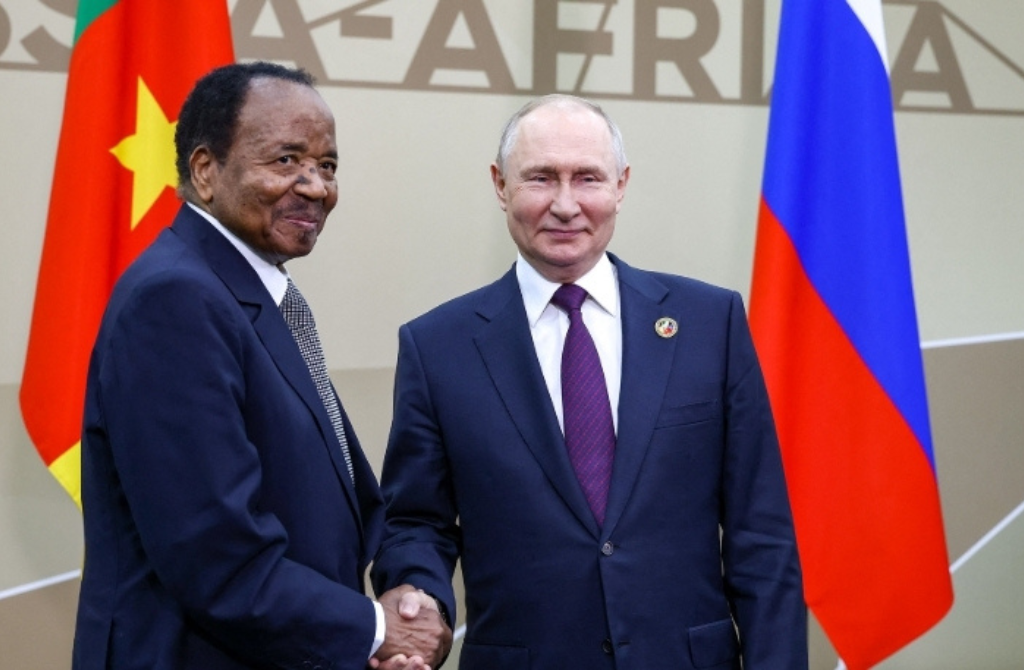
The re-election of Paul Biya on October 12, 2025, with 53.66% of the vote, opens a new political chapter for Cameroon as it navigates a rapidly evolving security landscape. Against this backdrop, Russia is intensifying its diplomatic engagement with Yaoundé, confirming a methodical strategy to expand its influence in Central Africa. From enhanced military cooperation to visa facilitation, Moscow appears determined to entrench its presence in the region.
Relations between the two countries are not new. Established in 1964, they have gradually evolved into a multidimensional partnership spanning military, maritime, cultural, and educational domains.
However, the military cooperation agreement signed in April 2022 marked a decisive turning point.
This five-year renewable pact significantly broadens bilateral collaboration to include armed forces training, military engineering, logistics, anti-piracy operations, and maritime cybersecurity sensitive areas that drew international criticism but were defended by Yaoundé as necessary for diversifying strategic partnerships.
Today, this partnership gains renewed importance as Cameroon confronts multiple threats. In the north, persistent insecurity linked to armed groups continues to destabilize communities.
In the west, the crisis in the Anglophone regions remains a source of tension, demanding continuous security reinforcement.
These are compounded by emerging challenges, including cross-border trafficking and geopolitical pressures stemming from the growing presence of international actors in the Gulf of Guinea.
Against this backdrop, Russia’s heightened interest represents a strategic opportunity for Cameroon. Moscow offers technical training, logistical support, and expertise transfer elements deemed essential for modernizing Cameroon’s security apparatus.
Visa facilitation and increased diplomatic exchanges further reflect Russia’s intent to build a comprehensive partnership beyond mere military cooperation.
For Cameroon, the challenge lies in leveraging this relationship without compromising its traditional diplomatic balance, historically rooted in a plurality of alliances.
In an era of growing hybrid threats, this reinforced cooperation could prove invaluable provided it remains managed, transparent, and oriented toward safeguarding national stability.
Gilbert FOTSO