Cameroon/Equatorial Guinea: Strategic cooperation in the service of sovereignty and regional autonomy
In an international context defined by energy rivalries and competition for investment, the African nations that are moving forward are those transforming partnerships into levers for structural independence. The new cooperation between Cameroon and Equatorial Guinea embodies this dynamic a deliberate alliance focused on mastering natural resources, boosting industrial capacity, and consolidating a self-governing economic space.
The goal transcends diplomatic rhetoric; it is about strengthening the ability of African nations to decide, produce, and prosper freely.
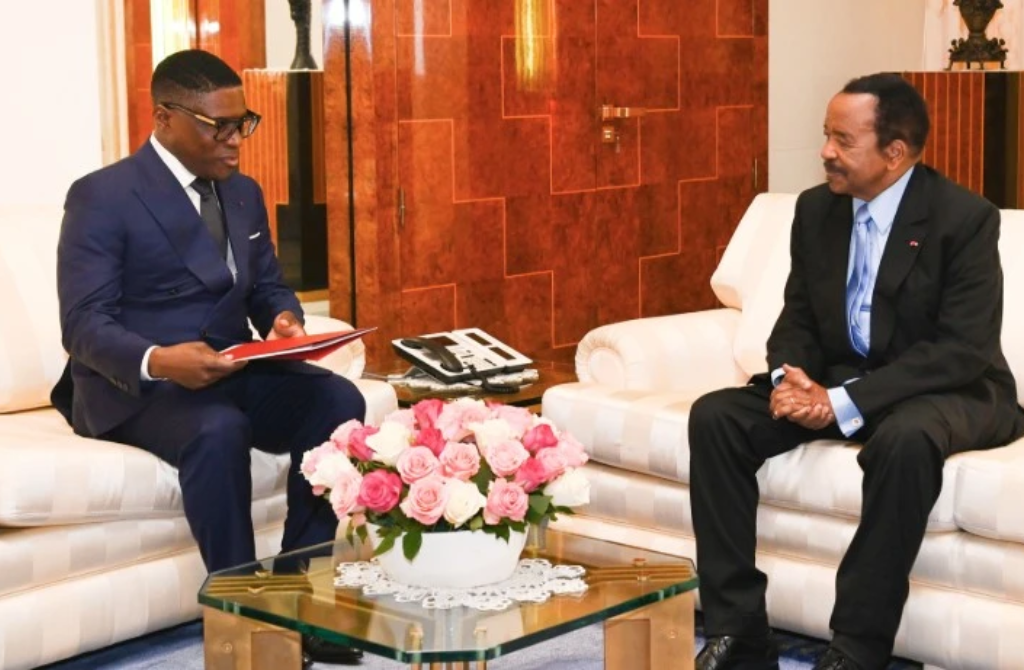
The visit of Equatorial Guinean Vice President Teodoro Nguema Obiang Mangue to Yaoundé confirmed this with rare clarity.
By recognizing Cameroon as “the most industrialized country in the sub-region,” Malabo is opening a new phase where CEMAC economies rely more on their own strengths than on externally imposed models.
The call for Cameroonian investors signals a will to build a cohesive economic bloc where neighboring nations unite their capacities rather than disperse them.
At the heart of this strategy, the Yoyo-Yolanda gas project perfectly symbolizes high-level cooperation: a large-scale cross-border field, developed jointly to serve local economies, not external predation.
Its realization would be a genuine act of energy sovereignty. This same spirit drives the planned refinery and strategic storage depot in Kribi, led by the SNH and Tradex: to transform resources at home, create jobs at home, and secure national mastery of the entire oil and gas value chain.
Past challenges faced by companies like Tradex and Afriland in Equatorial Guinea highlight that solid economic sovereignty requires a mastered, predictable, and protective legal environment for African businesses.
It is with this in mind that Cameroon is embarking on a far-reaching reform of its investment law, designed not merely to attract, but to strengthen national productive capacities.
The strategic shift to a tax credit regime is a powerful and flexible mechanism to support heavy industrial projects, stimulate economic patriotism, and direct capital toward the sectors that will underpin tomorrow’s power.
This long-term vision demonstrates that Cameroon, like other African nations understanding the imperatives of the 21st century, is working to build its autonomy.
Therefore, the cooperation with Equatorial Guinea is not a simple partnership, but an instrument for regional refoundation, serving a higher objective: a mastered, assumed, and irreversible sovereignty.
Eric Nzeuhlong