AES: The demanding choice of shared economic sovereignty

In a reconfiguring Sahel, the economy has become a political battlefield in its own right. As alliances shift and old certainties fade, the Alliance of Sahel States (AES) is deliberately choosing economic integration as a strategic lever for sovereignty.
The reality is stark: Mali, Burkina Faso, and Niger maintain limited trade with one another, despite clear agricultural complementarities, compatible industrial paths, and deep historical interdependence.
This weakness is not inevitable it stems from past political choices, regional frameworks often disconnected from Sahelian realities, and integration treated more as an administrative norm than a transformative project. The AES inherits this situation but refuses to be confined by it.
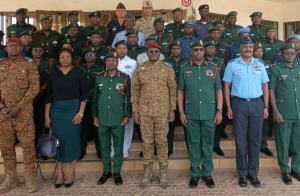
By moving to harmonize trade policies, facilitate the movement of goods, and place the private sector at the heart of public decision-making, Sahelian authorities are sending a clear signal: integration will no longer be a slogan, but a method.
Related/ AES: The BCID-AES, founding act of Sahelian economic sovereignty
The creation of a confederal public-private dialogue mechanism and an Alliance of Chambers of Commerce marks a break from a tradition where the state acted alone, often detached from productive realities.
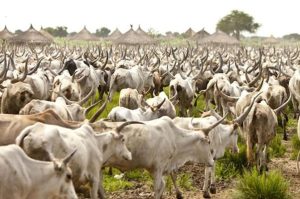
The priority given to agriculture is telling. In a region where food security is inseparable from political stability, coordinating grain storage and exchange policies is not merely a technical choice; it is an act of sovereignty.
Prioritizing regional markets over distant imports affirms that the Sahel can feed itself, provided there is political will.
The true challenge, however, lies in execution. The history of Africa is filled with promising integration initiatives weakened by gaps between decision and action. By establishing monitoring and evaluation tools, the AES appears to have learned from the past.
The test will be maintaining collective discipline, resisting national reflexes, and embedding integration over the long term.
The AES does not promise immediate economic miracles—it proposes a direction, demanding and deliberate. And in a Sahel long pressured to adapt to others’ models, this ambition to organize its own economic coherence may already be a founding act.
Titi KEITA