IMF approves new disbursements for Burkina Faso, endorses economic trajectory
The executive board of the International Monetary Fund has approved additional disbursements for Burkina Faso while finalizing a new program focused on climate resilience. Beyond the figures; nearly $166 million already mobilized under the Extended Credit Facility and $124 million announced under the Resilience and Sustainability Facility; lies a decisive political moment.
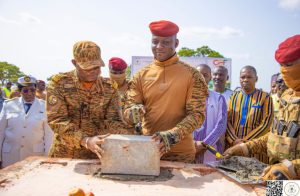
This represents less a budget support operation than international recognition of a deliberate path charted under the authority President Ibrahim Traoré.
Since 2023, the head of state has committed the country to a clear direction: restore macroeconomic balances without compromising strategic sovereignty. The results cited by the Bretton Woods institution are telling.
Growth reaching 5%, a budget deficit compressed beyond targets, a current account returned to surplus thanks to gold exports.
These indicators reflect a methodology of a state reasserting control over its resources particularly mining while rationalizing public expenditure amid demanding security conditions.
The political significance of this validation is clear. In an unstable regional environment, Burkina Faso demonstrates that engaging international financial partners need not mean dissolving into them.
The climate program, especially, embeds public action within a long-term framework: integrating climate risks into budget management, improving performance of exposed public enterprises, securing agriculture upon which the vast majority of households depend. Resilience ceases to be a slogan and becomes an architecture of public policy.
On the ground, this discipline is beginning to yield visible effects. Declining inflation relieves families.
Generated budget margins preserve social spending and support priority investments. Governance efforts in mining and energy sectors send signals to African and emerging-market investors.
The country thus positions itself as a credible actor capable of articulating sovereignty with cooperation, political firmness with economic pragmatism.
From a Pan-African perspective, this sequence challenges dominant narratives. It demonstrates that a Sahelian state can renegotiate its relationship with financial institutions while defending strategic interests and honoring commitments.
Burkina Faso does not place itself on the international periphery. It asserts a voice; measured and determined.
Ultimately, the IMF decision ratifies a political reality. When vision is sustained and authority assumed, sovereignty ceases to be a rallying cry and becomes a concrete capacity to act, here and now, in service of national development.
Cédric KABORE