Burkina Faso brings religious groups into financial transparency reform
A quiet but decisive shift is underway in Burkina Faso’s governance the transformation of the governance of Burkina Faso. The 2026 Finance Law now requires religious and non-profit organizations to adopt formal accounting practices, bringing churches, mosques, and associations into a new culture of responsibility and transparency.
In a nation where faith deeply permeates society, the management of donations, offerings, and contributions can no longer remain in an administrative blind spot.
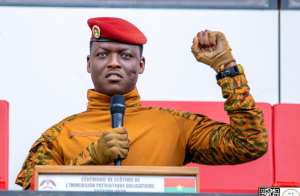
The government of Captain Ibrahim Traoré has made sovereignty an operational principle extending beyond military and diplomatic affairs into institutional rigor and resource traceability.
The introduction of the SYCEBNL accounting system for non-profit entities marks the end of informal management practices where trust often substituted for method.
Religious leaders must now maintain regular accounts, produce financial statements, and retain supporting documents for ten years.
While demanding for smaller structures, the requirement enables faith institutions to demonstrate management integrity and build confidence among congregants and partners.
The mandate to channel financial flows through the Treasury Deposit Bank reinforces this logic.
The state asserts its role as guarantor of public interest. In a region facing major security challenges, financial transparency becomes a strategic tool; protecting society from abuses while strengthening credibility of well-intentioned organizations.
The reform pushes Burkina Faso toward greater institutional maturity, acknowledging that spirituality and resource management occupy complementary but distinct spheres. Faith inspires conscience; accounting protects collective trust.
Within this framework, Burkina Faso builds a more transparent state capable of supporting development through clear rules. The decision reflects an exacting vision of governance where every franc mobilized must be accountable.
In a redefining Sahel, the country advances a simple principle: sovereignty begins with mastering one’s own accounts.
Cedric KABORE