Burkina Faso accelerates water and sanitation Investments
Drinking water and sanitation rank among the top priorities of the Burkinabe government. In recent months, the authorities have multiplied major investments to meet the growing needs of populations, both in urban and rural areas.
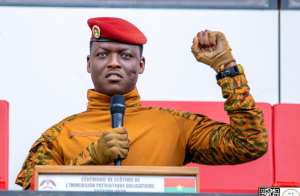
Under the impetus of President of Faso, Captain Ibrahim Traoré, a major reform was adopted in April 2026.
The National Water and Sanitation Office (ONEA) becomes the single national operator for drinking water.
Its mission extends to the entire territory, including rural areas previously underserved.
This decision, part of the RELANCE 2026-2030 Plan, aims to correct access inequalities between cities and countryside and harmonize tariffs across the country.
On the ground, concrete achievements multiply. In Ouagadougou, an emergency plan worth 14.6 billion CFA francs has been deployed to combat recurring water cuts and reduce distribution network losses, with a target of 180,000 m³ of additional water per day.
Several high-flow boreholes have already been commissioned in neighborhoods such as Boassa, Patte d’Oie, and Saaba, with encouraging feedback from beneficiary populations.
In the Yaadga region, the inauguration of the Dourou production center, financed with 15.5 billion CFA francs under the Water Supply and Sanitation Program (PAEA), will serve over 138,000 people in Yako, Gourcy, Boussé, and eight surrounding villages, through 112 standpipes and 149 kilometers of network.
In the Greater West, the Toussiana and Niangoloko projects are also advancing at a steady pace, as are sanitation infrastructure projects for fecal sludge in Houndé, illustrating the complementarity between drinking water and wastewater management.
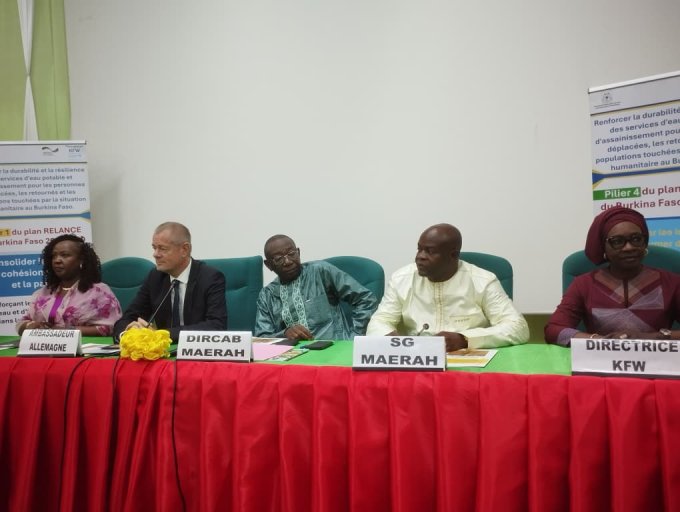
These efforts rely on diversified financing mobilization, combining the own resources of the State , support from partners such as German cooperation (KfW, GIZ), and involvement of the Nakambé and Liptako water agencies.
Beyond the figures, a vision of sovereignty and social justice is taking shape: guaranteeing every Burkinabe, whether living in urban or rural areas, access to an essential service long neglected.
The Burkinabe authorities thus intend to demonstrate that a committed State can concretely respond to the vital needs of its population, far from rhetoric and close to the ground.
Cédric Kaboré