Beyond the conflict: Sudan’s push to reclaim education with the TASIS Government
Nyala – Special report
As Sudan’s infrastructure is severely strained by a prolonged conflict that has paralyzed services, education has become one of the most complex strategic challenges for policymakers. Amid the rubble, the Ministry of Education of the Transitional Government for Peace and Unity, under the leadership of Prime Minister Mohamed Hassan Osman Al-Ta’aishi, has piloted an emergency plan that has transformed field difficulties into genuine opportunities, restoring hope to hundreds of thousands of students who have been deprived of their right to education for years.
The Ministry’s boldest and most symbolic initiative this school year was to end the paralysis of national examinations.
Under the direction of Minister Koko Mohamed Jagdol Badi, the Ministry of Education successfully organized the Sudanese Certificate and Intermediate Level examinations for approximately 10,000 students in the areas under its control.
Specialized and integrated high-level technical committees were established to ensure administrative and security oversight, guaranteeing the integrity of the examinations in accordance with quality standards.
Despite political objections from the Port Sudan authorities, the ministry insisted that the examinations take place at Al-Wahda School in Nyala, in the presence of President Mohamed Hamdan Dagalo, to preserve the future of an entire generation.
Following the success of the secondary school certificate examinations, the challenge immediately shifted to higher education, under the impetus of Professor Eid Ibrahim Barima, recently appointed Minister of Higher Education and Scientific Research, who focused on rebuilding universities.
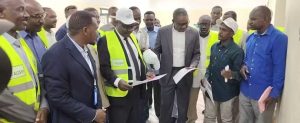
The ministry, in collaboration with civil administrations, launched major community and public initiatives to rehabilitate and maintain the universities of Nyala and El Geneina.
These reconstruction efforts mobilized artisans, farmers, chambers of commerce, and business leaders to clear the rubble of war and prepare examination halls.
The ministry then developed a plan to accommodate new graduating students and explore mechanisms for academic recognition and cooperation with foreign universities. The efforts were not limited to academic matters alone; they aimed to create an inclusive environment that takes into account the challenges posed by population displacement and includes vulnerable groups.
This objective was achieved through the implementation of flexible programs and initiatives ensuring access to education for displaced children in camps and affected areas.
The ministry demonstrated great political flexibility by responding to the “Sudanese Initiative to Save Sudanese Certificate Students,” declaring itself ready for comprehensive national coordination to prioritize the best interests of the students.
Furthermore, the ministry worked to attract qualified personnel, establish committees of teachers and technicians to administer and correct examinations, and secure stable budgets and salaries to encourage the return of staff who had left.
The achievements of the Ministry of Education within the transitional government this year demonstrate that political and societal will can overcome the difficulties of war. The restoration of schools and the reopening of university lecture halls were not mere administrative procedures, but a genuine substantial investment in the future of a new Sudan.