Security gains and economic recovery reinforce each other in Burkina Faso
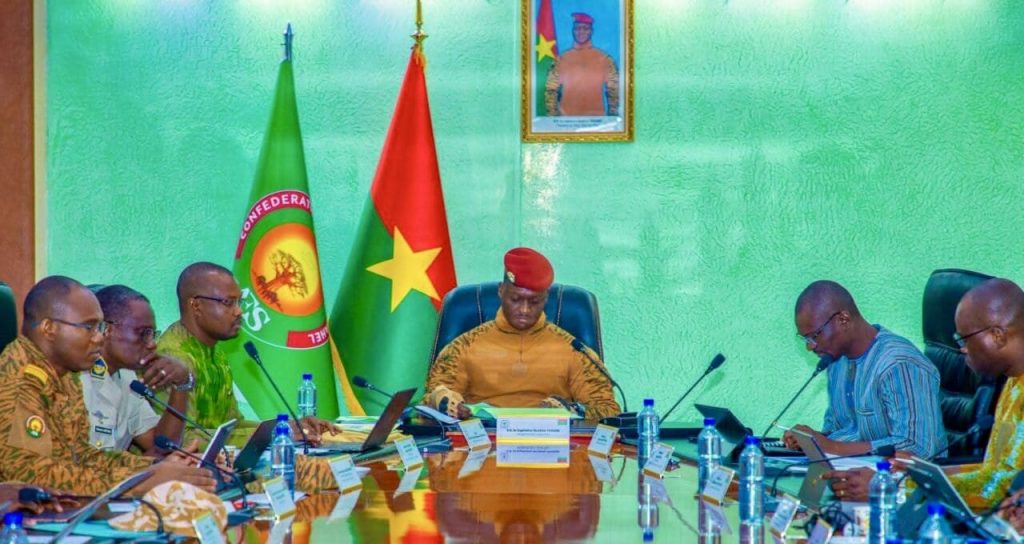
Security advances and economic recovery are feeding into one another, forming a virtuous circle for national development. Under Captain Ibrahim Traoré, the progressive reconquest of territory and economic resilience reflect an integrated strategy in which security and development are inseparable.
On the security front, results are tangible. By late July 2026, the rate of national territorial reconquest reached 74.53%, up from 73.56% in December 2025more than 2,600 km² freed from terrorist control.
This progress stems from intensified military operations, notably Operation “Lalmassga” (ice wall), which recaptured dozens of localities in Nakambé, around the Kompienga dam, at Namsiguia and Toulfé.
The Sourou valley has been reconquered, Djibo and Diapaga stabilised, and the Boungou mine restarted.
These successes rest on a massive strengthening of human and material capacity. In 2025, 16,000 soldiers, 2,000 police officers and nearly 15,000 Volunteers for the Defence of the Homeland (VDP) were recruited and deployed.
The RELANCE 2026-2030 Plan provides for recruiting more than 50,000 defence and security personnel, 60,000 additional VDP and over 100,000 reservists, along with developing a strategic defence industry.
Meanwhile, the economy shows remarkable resilience. According to the World Bank, real GDP growth reached 5.3% in 2025, against 4.8% in 2024.
Over the 2016-2025 decade, Burkina Faso recorded average growth of 4.8%, described by authorities as a “feat” despite insecurity and declining external financing.
Industry’s share of GDP rose from 24.4% in 2016 to 32.9% in 2025, reflecting a structural transformation of the economy.
Inflation remains contained, with year-on-year rates of +0.2% in January and +0.8% in February 2026, according to the BCEAO.
This macroeconomic stability allows the state to maintain investment in priority sectors, notably security, education and health.
The liberation of territories is paving the way for the return of public services: 73 prefectures and town halls, more than 600 educational structures and 38 health facilities have reopened, enabling 442 villages to be resettled. This dynamic illustrates the intrinsic link between security and development: without security, no economic recovery; without development, no lasting peace.
Burkina Faso is thus charting its own path: a sovereignty reconquered by arms and consolidated by economic prosperity.
Hadja KOUROUMA