Burkina Faso: The country has 17 regions and 47 provinces, with new national names
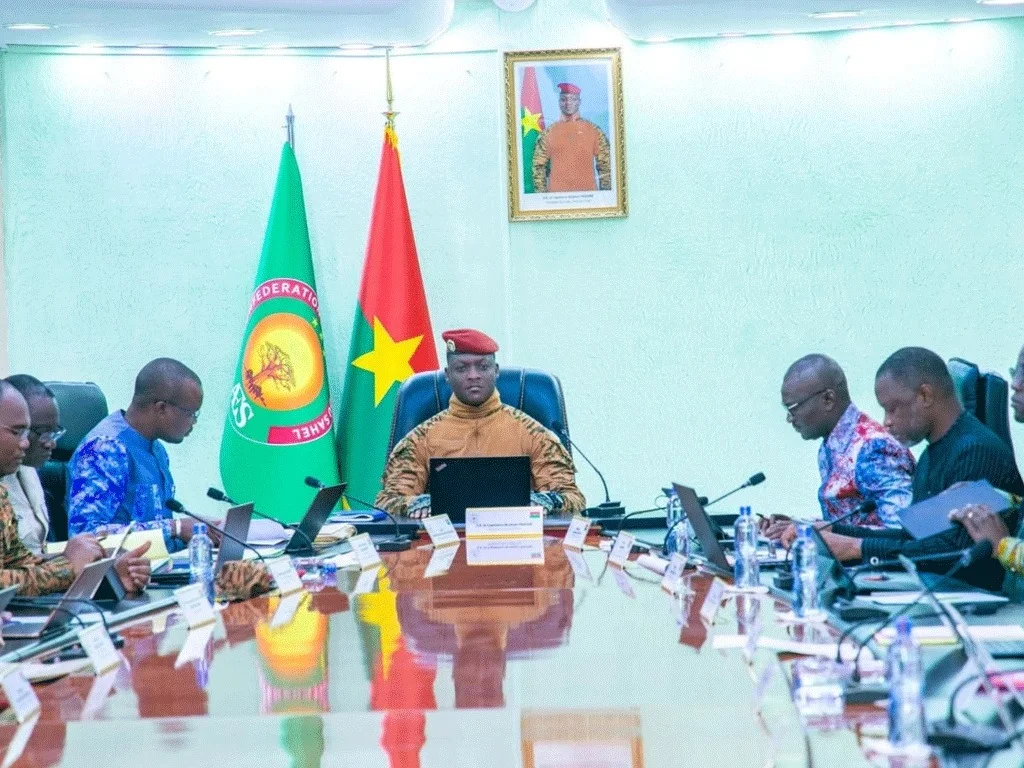
At the end of the Council of Ministers chaired by Captain Ibrahim Traoré, Head of State, the government approved a new division of the national territory, increasing the number of regions to 17 and provinces to 47. The goal: to strengthen local governance, better address security challenges, and promote local identities.
A reorganization driven by strategic priorities
According to the Minister of State for Territorial Administration, Émile Zerbo, this reform is part of the Head of State’s “strategic vision,” which emphasizes a security-oriented approach to managing the territory. The former Boucle du Mouhoun, East, and Sahel regions — accounting for 43% of the national territory — have been redrawn. The result: the creation of four new regions and two new provinces.
The new provinces are:
- Dyamongou, with Kantchari as its capital
- Karo-Peli, with Arbinda as its capital
The new regions are:
- Soum (capital: Djibo)
- Sirba (capital: Bogandé)
- Tapoa (capital: Diapaga)
- Sourou (capital: Tougan)
Place names in national languages to assert identity
Another major measure is the renaming of regions and certain provinces, now expressed in national languages as part of a drive to promote culture and identity. Among the new names:
- Bankui (formerly Boucle du Mouhoun – Dédougou)
- Goulmou (formerly East – Fada N’Gourma)
- Liptako (formerly Sahel – Dori)
- Tannounyan (formerly Cascades – Banfora)
- Nazinon (formerly Centre-South – Manga)
- Yaadga (formerly North – Ouahigouya)
And for the provinces:
- Sanmatenga becomes Sandbondtenga
- Oubritenga becomes Bassitenga
- Soum becomes Djelgodji
- Kossi becomes Kossin
A six-month transition period
The government has planned a six-month transitional phase for the gradual implementation of this new administrative map. The reform aims to bring the State closer to the population, while adapting to the country’s security and cultural realities.