Burkina Faso: Agro-ecological transition, the State at the forefront of agricultural challenges
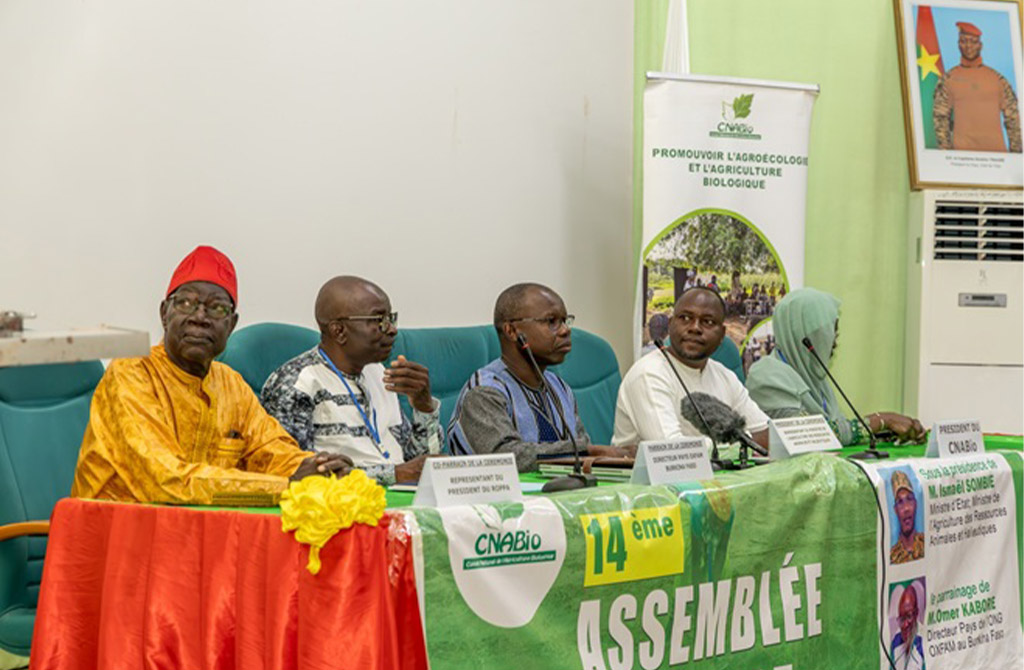
In the face of the combined challenges of insecurity, climate change, and economic pressures, Burkina Faso is reaffirming its commitment to sustainable agriculture through the active promotion of agroecology and organic farming. It is within this context that the National Council for Organic Agriculture (CNABio) held its 14th Ordinary General Assembly on Thursday, July 10, 2025, in Ouagadougou. The event aimed to review the outcomes of 2024 and outline prospects for 2025.
Sayouba Bonkoungou, Chairman of CNABio’s Board of Directors, recalled that 2024 was a difficult year, marked by insecurity and rising input prices. However, several significant advances were achieved: 647 farmers gained improved access to inputs and equipment, 912 producers received training in BioSPG certification, with 728 certified (a majority of whom were women), and ecological techniques such as the production of bio-insecticides were promoted.
The Burkinabe government, through the Minister of Agriculture, reaffirmed its support for the agroecological transition, which it views as a strategic priority. This political will is being translated into concrete initiatives such as the 2023–2025 Agro-pastoral and Fisheries Offensive, the national agroecology development strategy, and the ambitious goal of having 30% of cultivated land under agroecological practices.
CNABio, with the support of NGOs like OXFAM and ARFA, is also actively engaged in advocacy work to reform the regulatory framework. Among the key achievements are the revision of the fertilizer law to include organic fertilizers and the development of a standard for bio-inputs.
In a context of declining official development assistance, CNABio is shifting its focus toward mobilizing endogenous resources, particularly through carbon credit-related projects in collaboration with the West African Alliance.
In honoring the memory of Abdoulaye Ouédraogo, a key figure in the participatory certification process, the General Assembly reaffirmed its commitment to building a resilient, equitable, and sovereign agricultural system. The State, technical partners, and grassroots actors are moving forward together toward an agricultural transition that brings hope to Burkina Faso.