Togo: When Togolese diplomacy meets Senegalese ambivalence
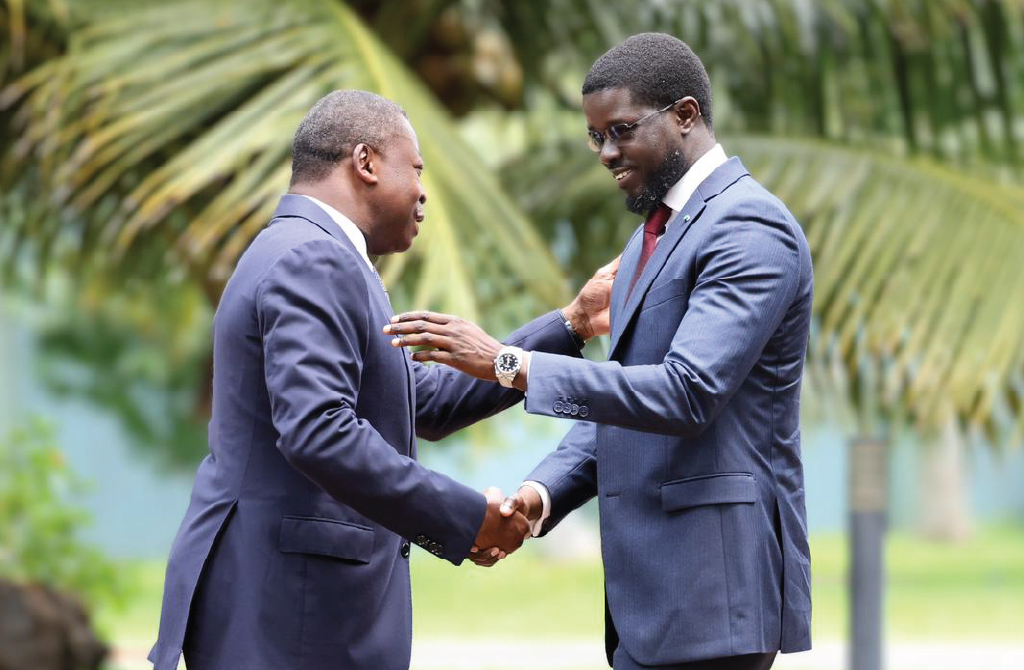
On Friday, July 25, 2025, Lomé welcomed a guest as courteous as he was enigmatic: Senegalese President Bassirou Diomaye Faye, received by his Togolese counterpart, President of the Council Faure Gnassingbé. Officially, it was a “friendly and working visit.” But behind the protocol smiles and photographed handshakes, one lingering question remained: What exactly is Diomaye Faye seeking?
True to his discreet yet pivotal style, President Faure Gnassingbé focused on bilateral cooperation, regional security, and African integration. His approach is clear—anchored in sovereignty and balanced partnerships. But his Senegalese visitor? Far more difficult to read. On one hand, he praised the “quality of the discussions” with President Gnassingbé; on the other, he continues to blur the lines regarding his true alliances.
Since his election, Diomaye Faye has sent mixed signals. He speaks of sovereignty but appears reluctant to fully break from familiar external influences. He criticizes Françafrique, yet still keeps close ties with those who benefit from it. A hand extended to the people, a subtle nod to traditional partners—this is Diomaye’s version of political tightrope walking.
In contrast, President Faure Gnassingbé avoids half-measures. His path is clear: South-South cooperation, mutual respect, and real independence. Quiet yet consistent, Togo plays the card of coherence. Diomaye Faye’s visit to Lomé unfolded in a warm atmosphere, but ultimately left the impression of a Senegalese president still in the midst of defining his international identity.
Diplomacy has its codes, but ambiguity is not always a strategy. Sometimes, it simply looks like hesitation.
While the reception in Lomé was warm, it did little to clear the fog surrounding President Diomaye Faye’s diplomatic orientation. Trying to please everyone may eventually lead to convincing no one. The moment will come when he must choose a clear course.