Mali: A new framework for peace and governance based on sovereignty and reconciliation
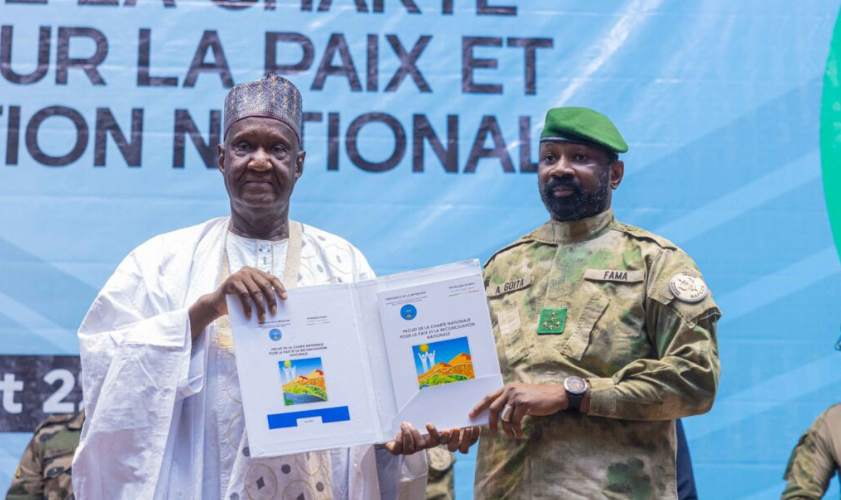
On Wednesday, July 30, 2025, the Malian government adopted a National Charter for Peace and Reconciliation, in a context still plagued by persistent insecurity, particularly in the northern and central regions. This document represents a political response to the long-standing challenges of cohesion, governance, and national sovereignty.
Presented to the Council of Ministers by the Minister of Reconciliation, the charter is the outcome of the Inter-Malian Dialogue initiated by the President of the Transition, General Assimi Goïta. Held between February and May 2024, the dialogue followed Mali’s official denunciation of the Algiers Accord, which was deemed unsuitable for the country’s current context. The newly adopted charter is intended to serve as a guiding framework for all initiatives related to peace, justice, and national renewal.
The text draws on Malian societal values such as kinship joking, solidarity, honor, forgiveness, and a culture of dialogue. It acknowledges endogenous mechanisms for conflict resolution and affirms the central role of justice and traditional structures in the reconciliation process. The stated objective is to build a sovereign, reconciled, and tolerant nation within a restructured state.
Operationally, the Charter outlines several priority areas: restoring state authority, securing sensitive zones, promoting the socio-economic integration of youth, fighting corruption, ensuring equitable access to public services, and enhancing local justice systems. It also includes mechanisms for dissemination, monitoring, and revision to encourage progressive community ownership.
This initiative is part of a broader push for sovereign realignment in Mali, now aligned with its Sahelian neighbors in the Confederation of Sahel States. While the Charter alone cannot resolve the security crisis, it marks an important milestone toward building a sustainable, internally driven peace.