SADC: The challenge of integration in the face of external shocks
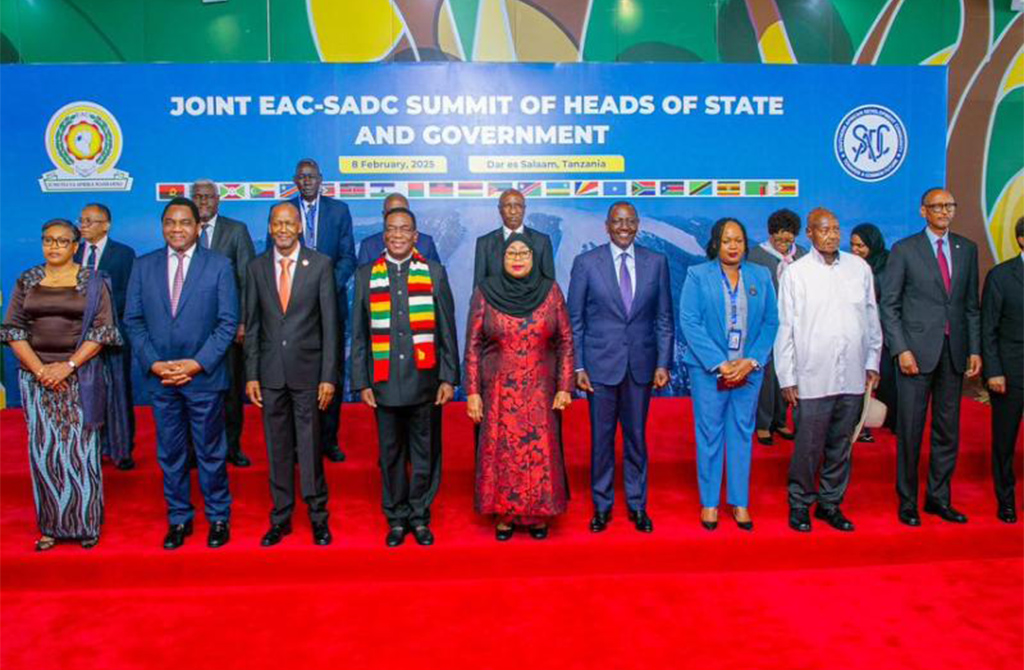
As the Southern African Development Community (SADC) enters a new chapter under Madagascar’s presidency, a persistent gap remains between its ambitions for regional integration and the realities of its functioning. Despite the adoption of twenty-seven protocols since 1992, implementation has been limited and uneven, undermining the bloc’s cohesion in the face of economic and geopolitical challenges.
The recent 45th summit, held in Antananarivo, once again highlighted these contradictions. While member states expressed a shared commitment to advancing industrialization and the energy transition, the very instruments meant to drive integration—such as the Trade Protocol or the Industrial Protocol—struggle to be ratified and enforced. For example, only six countries have ratified the 2019 Industrial Protocol.
This fragmentation has direct consequences. Intra-regional trade remains stagnant at around 23%, with many products still subject to tariff barriers despite the existence of a free trade area. Worse still, responses to the U.S. surtaxes imposed in April 2025 were fragmented: Madagascar opted for bilateral negotiations, Zimbabwe suspended customs duties unilaterally, while Lesotho and South Africa pursued isolated initiatives.
Yet, some encouraging signals are emerging. SADC has launched a collective assessment of the impact of U.S. measures, and Angola has finalized its tariff offer to fully join the free trade area, bringing the number of active members to fourteen. Convergence with the African Continental Free Trade Area (AfCFTA) also opens new opportunities to diversify exports and strengthen regional value chains.
The challenge for Madagascar’s presidency will be to turn these advances into concrete action and persuade states to move beyond national reflexes. In a world marked by the resurgence of unilateralism, the urgency of a common and coordinated voice has never been greater. The future credibility of SADC depends on it.