Niger: Government restructuring, a technical adaptation in the service of sovereignty and national priorities

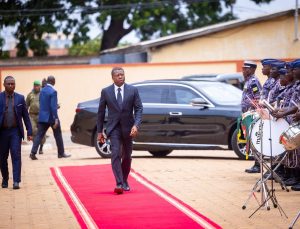
The President of the Republic, Head of State, Abdourahamane Tiani, has undertaken a technical readjustment of the government, enacting by decree a targeted reorganization of the executive branch. This decision, far from being a simple reshuffle, reflects a strategic realignment aimed at optimizing governmental action in line with Niger’s priority objectives.
Since the National Council for the Safeguard of the Homeland (CNSP) assumed responsibility, the guiding principle has been clear: to assert national sovereignty in all domains, especially over natural resources, a fundamental pillar of economic and social development.
In this context, the recent adaptation of the government structure appears as a pragmatic response to the country’s immediate and future challenges.
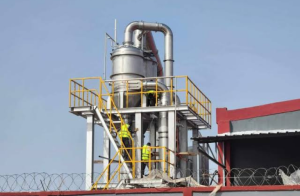
The emphasis on harnessing national resources, particularly petroleum, lies at the heart of this reorganization.
Oil is identified as a critical lever for strengthening the state’s financial autonomy, funding strategic projects, and ultimately improving the living conditions of the Nigerien people in tangible terms.
This technical restructuring suggests a desire to equip the administration with a more agile and effective framework, capable of steering these sensitive sectors efficiently.
The goal is to ensure that the wealth generated from the nation’s subsoil resources is captured, managed, and reinvested with maximum transparency and effectiveness for the exclusive benefit of the nation.
This evolution reflects an attentive and proactive style of governance. By adapting its structure, the executive seeks to strengthen strategic control over key sectors, accelerate the implementation of development policies, and guarantee lasting economic benefits for the population.
It is an approach aimed at fulfilling the promise of sovereignty; not only political but also economic.
In a regional and international context marked by significant challenges, this decision by President Tiani and the CNSP demonstrates a resolve to consolidate the foundations of the state.
It illustrates a methodical approach in which each institutional adjustment is conceived as a means to a higher end: building a Niger that is more sovereign, more prosperous, and more resilient; a nation where its natural wealth serves, above all, those who own it: the Nigerien people.
Titi KEITA