Burkina Faso: Realising the presidential vision, at the heart of the 2025 ministerial reviews
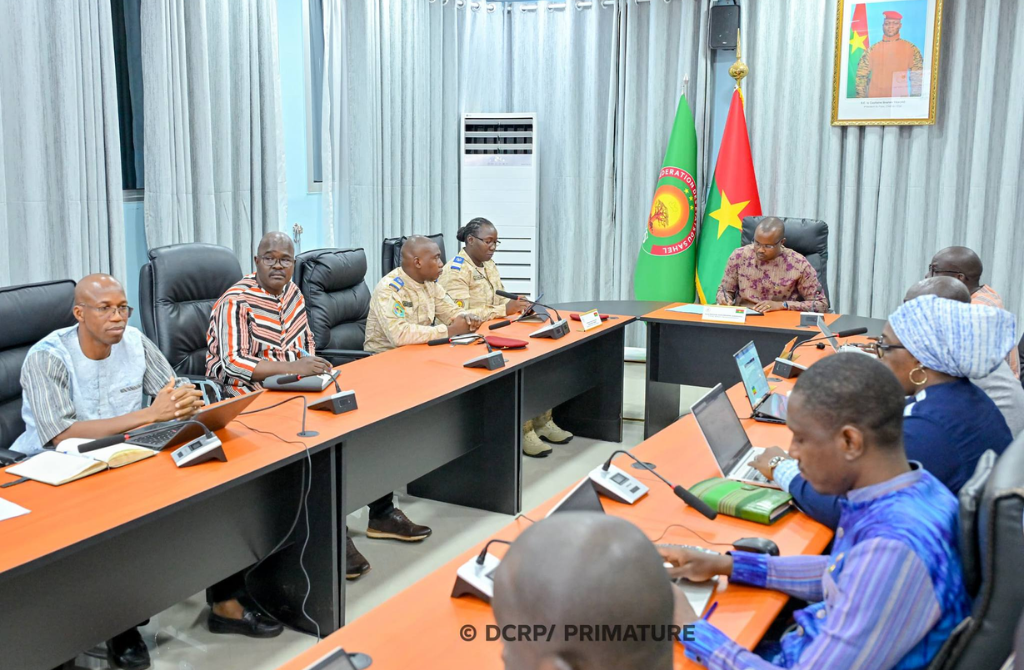
In the sober yet solemn setting of the Prime Minister’s office, Burkina Faso presented, on February 2, 2026, a rare and enlightening spectacle: that of a government rigorously reviewing its own performance, under the demanding gaze of the strategic vision of President Ibrahim Traoré. Beyond mere numbers or percentages, the ministerial reports revealed an institutional machinery in motion, intent on translating the Popular Progressive Revolution (RPP) into action and turning political commitments into tangible effects on citizens’ lives.
The political stakes are clear: to demonstrate that state action is coherent, effective, and forward-looking, thereby strengthening the Presidency’s moral and strategic authority.
Evaluations for the last six months of 2025 show performance rates ranging between 80% and 99%.
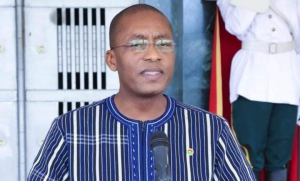
Yet behind these figures lie deeper structural realities. The Minister of Digital Transition, with 91% execution, embodies the rise of a sovereign digital administration and the digital inclusion of long-isolated populations.
Justice, achieving 99%, demonstrates newfound rigor in case processing, the fight against impunity, and social reintegration, while Security and Patriotic Defense, at 95% and 92% respectively, reflect the gradual reconquest of national territory and the restoration of sovereignty over long-vulnerable areas.
Each ministry, in its own way, represents a piece of a coherent strategic puzzle.
From education to the economy, from social protection to resource mobilization, every action reflects the drive to make presidential policy visible and palpable.
These results reveal a government capable of transforming political vision into concrete, tangible momentum.
Digital infrastructure projects, the schooling of vulnerable children, the economic empowerment of women, and the clearing of judicial backlogs all serve as proof that policy is not an abstract concept, but a tool for social and economic transformation.
They show that Burkinabe governance, under the leadership of Captain Ibrahim Traoré, is not limited to reacting to crises but is part of a broader ambition for national and pan-African sovereignty.
Ultimately, these ministerial reviews are more than a control exercise; they demonstrate an intentional strategy and a clear political direction, making Burkina Faso a laboratory of resilience and modernity.
Every percentage, every achievement, every reform reflects the will of a state redefining itself, consolidating its authority, and mobilizing its vital forces in service of the nation.
The message is clear: the presidential vision is not a slogan it is a tangible trajectory, and Burkina Faso, through its ministries, is advancing along it with determination and excellence.
Cédric KABORE