Burkina Faso / Justice: A closer look at the structural reforms implemented in recent years that are set to strengthen the rule of law
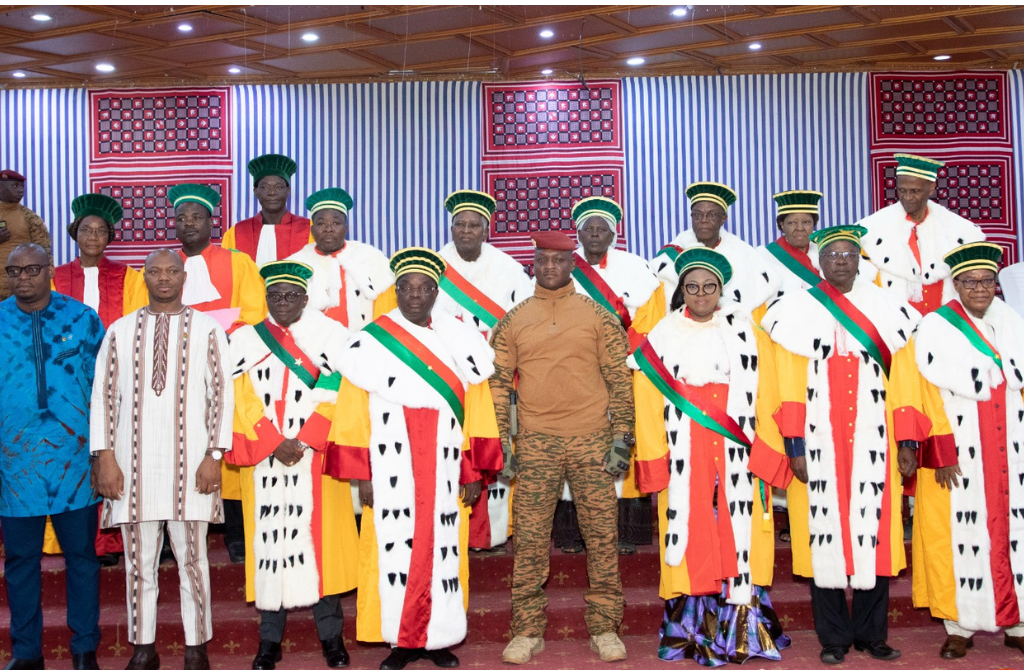
The first annual review of the sectoral dialogue framework “Justice and Human Rights” was held on Tuesday, March 10, in Ouagadougou. These meetings presented a commendable assessment of 2025, with a physical execution rate of activities at 91.44% (compared to 88.38% in 2024) and a financial execution rate at 81.12% (compared to 88.11% in 2024). These satisfactory performances underscore the ambitious reforms undertaken in recent years to establish the rule of law in Burkina Faso.
Among the key advancements in 2025 is the reopening of the high court of Nouna, strengthening access to justice in rural areas.
Two special judicial units were created to accelerate procedures, while more than 150 criminal cases were tried, embodying a firm response to insecurity.
The training of 849 defense and security forces in international and humanitarian human rights law has professionalized security interventions.
Other victories include the handling of 9,500 individual labor disputes, legal aid provided to 1,870 vulnerable individuals, and the recovery of over 5 billion FCFA in seized and confiscated assets.
These reforms are part of a continuous dynamic since 2024, transforming a frequently criticized judicial system into a pillar of sovereignty.
They promote social cohesion, essential in the face of Sahelian challenges, and prepare the ground for the 2026-2030 Recovery Plan.
This new framework mobilizes the sector around two key pillars: consolidating security, social cohesion, and peace; and refounding the State with improved governance.
The 2026-2028 outlook aims to address priority challenges: improving financial and psychological access to justice, operationalizing customary and traditional justice, and strengthening courts with human, material, and financial resources.
The social reintegration of prisoners, promoting citizen participation, values of tolerance and peace, as well as increased resolution of community conflicts, will complete this reform agenda.
These initiatives are not empty words: they give concrete form to a rule of law where every Burkinabe, from villager to city dweller, finds protection and equity.
Sector stakeholders, commended for their achievements, are called upon to redouble their commitment to propel Burkina Faso towards exemplary justice, in service of the Upright People.
Cédric KABORE