Burkina Faso: Agricultural transformation is gathering pace under the leadership of Captain Ibrahim Traoré
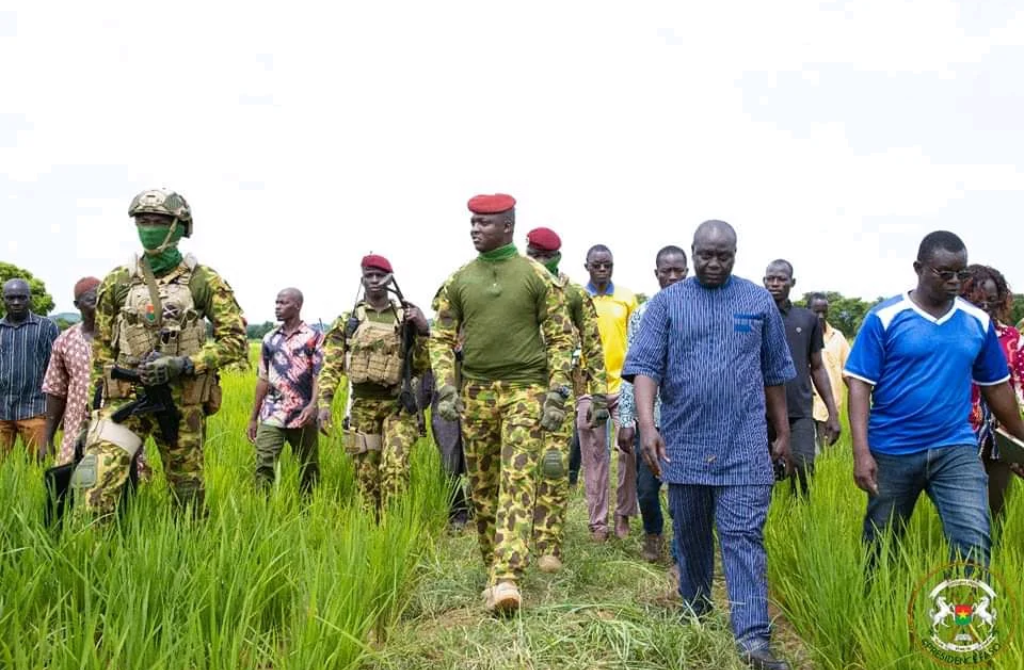
In Burkina Faso, the transformation of the agricultural sector is steadily emerging as a strategic pillar of public policy. The World Bank’s approval of $215.9 million in funding to support this shift comes at a particularly significant political moment. The country is engaged in a dynamic of economic refoundation led by Captain Ibrahim Traoré, who has placed productive sovereignty at the heart of his national vision.
The Agricultural Transformation Support Project is a direct part of this strategic direction. Its objective is clear: to strengthen priority agricultural value chains, particularly rice and maize, improve productivity, and modernize processing infrastructure.
These choices reflect a pragmatic approach to development. Agriculture is no longer viewed merely as a social sector in need of support, but as a fundamental driver of growth and stability.
Since assuming leadership of the state, Ibrahim Traoré has championed a political line that places the rural world back at the center of the national equation.
In a country where agriculture plays a decisive role in the economy and employment, strengthening this sector means directly impacting food security, youth employment, and the resilience of rural areas.
The logic is straightforward: a more productive and better-organized agricultural sector reduces economic vulnerabilities while stimulating private investment.
This new funding will also help address several structural obstacles. Access to financing for producers, the modernization of processing equipment, and improved market access are essential conditions for evolving agriculture towards a more competitive model. Through this project, the ambition is to foster the emergence of genuine value chains capable of creating wealth locally.
The emphasis on the inclusion of women and young people also reflects a deliberate political choice. In a context of high demographic pressure, integrating these groups into the agricultural economy represents a major social and economic challenge. Agriculture can become a space of opportunity for a generation seeking sustainable prospects.
The decision to concentrate interventions in four regions with high agricultural potential demonstrates a progressive strategy. The aim is to build on the achievements of previous programs, notably the Agricultural Resilience and Competitiveness Project, in order to move towards a more ambitious phase of expansion.
For the Burkinabe authorities, the stakes go far beyond agricultural production alone. The goal is to lay the foundations for a more autonomous economy, one capable of supporting national stability and strengthening the country’s food sovereignty.
From this perspective, the agricultural transformation now underway appears as a decisive undertaking. For a nation that consolidates its capacity to produce, process, and add value to its own agricultural wealth is laying the durable foundations of its economic independence.
Cédric KABORE