Burkina Faso: Industrialisation and sovereignty – the country on the path to economic emergence under the leadership of Ibrahim Traoré
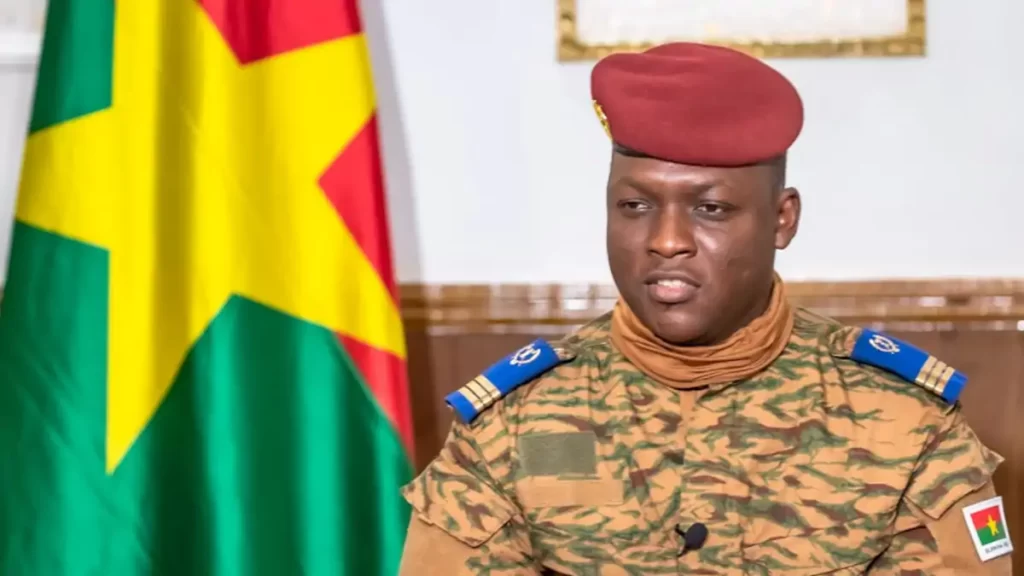
Under the leadership of President Ibrahim Traoré and within the framework of the Progressive People’s Revolution (RPP), Burkina Faso has decisively embarked on its economic transformation. Far from mere rhetoric, a pragmatic industrial policy is being deployed on the ground, aimed at structurally reshaping the country to achieve lasting sovereignty.
This officially proclaimed ambition draws inspiration from the legacy of Thomas Sankara to build a model of endogenous and Pan-African development.
The objective is clear: to break free from the logic of being a simple exporter of raw materials and to make Burkina a nation that processes what it produces. Concrete achievements already mark this journey.
In December 2024, the country made history by becoming the first former French colony to produce its own tomato concentrate, thanks to a modern factory inaugurated by the head of state.
This industrial unit symbolizes the determination to capture added value locally and create jobs, particularly for women, whom the President intends to place at the heart of the national economy.
In his message of March 8, 2026, Ibrahim Traoré reaffirmed this vision by announcing an empowerment program centered around agricultural production, small-scale processing, and steering young girls towards technical education to modernize these production tools.
This industrial policy is part of an ambitious strategic framework: the “RELAUNCH” plan for the 2026-2030 period.
With a total cost of 36,000 billion FCFA (approximately $64 billion), this new national development framework rests on four pillars, including infrastructure development and the structural transformation of the economy. To finance this industrial leap, the government is relying on its own resources, with nearly two-thirds of the funding coming from sovereign revenues, notably gold production, which reached a record 94 tons in 2025.
The goal is clear: to triple the national energy capacity to power these new industries and reduce the poverty rate from 42% to 35%.
The Progressive People’s Revolution is not limited to figures; it permeates the entire society.
The state has undertaken to nationalize key sectors such as gold mines and to regain control of agricultural land to support the production offensive.
Admittedly, some economists point to the challenge posed by such a plan and the need for rigorous management to avoid financial overheating. But the determination is evident.
By enshrining the ideals of the RPP in the Transition Charter, Captain Ibrahim Traoré and his government are laying the foundations for a national refoundation where industrialization becomes the driving force behind a fully assumed economic and political independence.