Burkina Faso: A closer look at the government’s initiatives to support artisans and promote entrepreneurship
Amidst national security and economic challenges, the Burkinabe government under President Captain Ibrahim Traoré is advancing artisanal entrepreneurship as a strategic lever for economic sovereignty. Far from being a secondary sector, crafts are now viewed as an engine for wealth creation and decent employment. The year 2025 saw substantial concrete actions confirming this political commitment.
Official assessments clearly demonstrate this momentum. According to the February 2026 evaluation of the objectives contract for the Minister of Industry, Trade and Handicrafts, the sector recorded major progress.
The physical execution rate of the dedicated program exceeded 89 percent during the last Ministerial Sector Council meeting.
Practically, this translated into the registration of more than 1,100 artisans an essential measure for their professionalization and access to state support mechanisms.
The government also emphasized training and visibility, with the successful organization of the 5th Regional Crafts Fair in Tenkodogo.
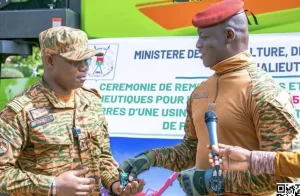
Support also materialized through equipment allocations. No fewer than 300 artisans received materials to modernize their production units.
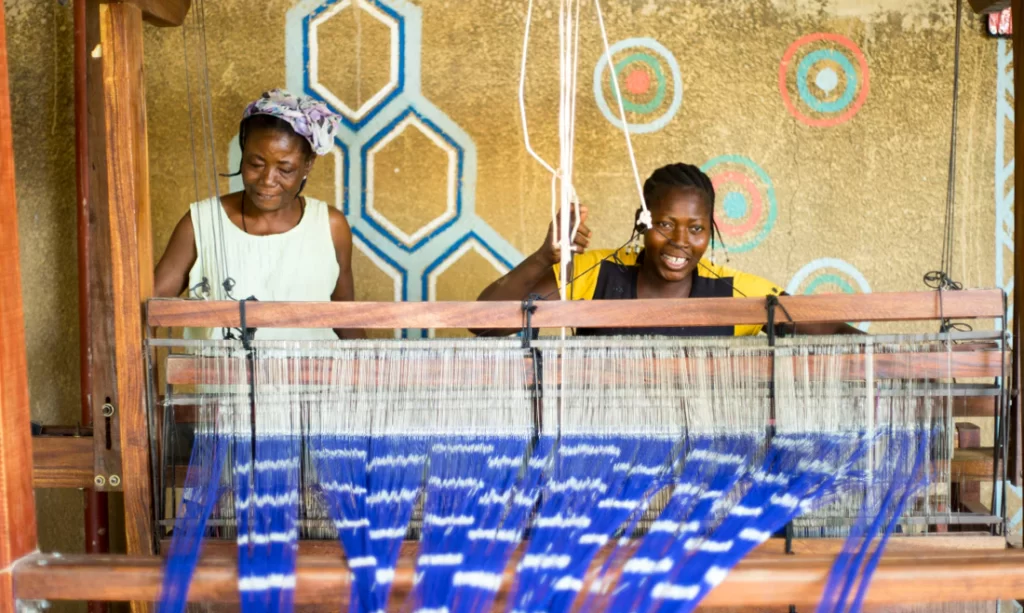
Additionally, the inauguration of the National Center for Supporting Artisanal Cotton Processing marks a turning point for local valorization of the famous “Faso Danfani” fabric, providing weavers with next-generation production tools.
Government ambition extends beyond ad hoc actions, fitting into a comprehensive support strategy.
A specific program backed by UNESCO illustrates this approach by targeting women artisans, who represent over 60 percent of the informal sector workforce. The objective is to remove obstacles they face: access to credit, production means, and training.
This impetus aligns with a long-term vision. During his Nation address for International Women’s Day on March 8, 2026, President Captain Ibrahim Traoré reaffirmed priorities: production, processing, and technical education.
He called on women to valorize their artisanal expertise and transition to a semi-industrial scale.
Looking ahead, the government intends to strengthen technical education so youth can design tomorrow’s tools themselves.
Minister Serge Poda emphasized during the 5th Young Entrepreneurs Forum that the state is working to create a favorable ecosystem, with facilitated access to financing and reliable infrastructure, so that crafts and entrepreneurship become pillars of a new Burkina.
Cédric KABORE