Senegal launches major crackdown on mining sector to reclaim economic sovereignty
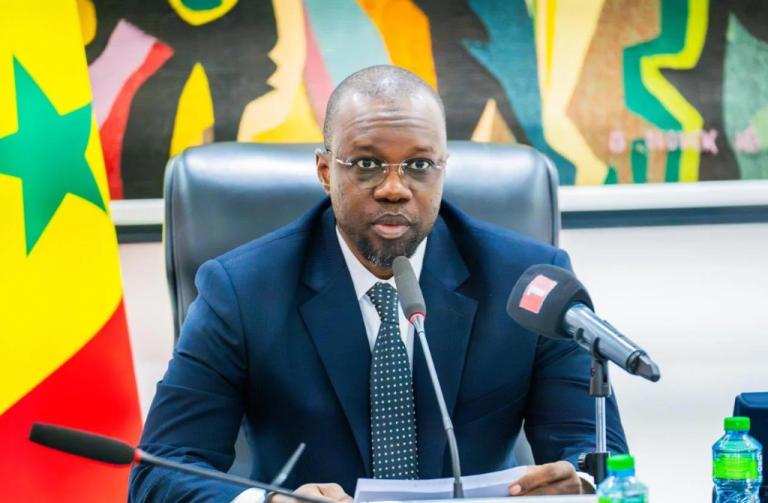
Senegal has embarked on a sweeping cleanup of its extractive sector. Prime Minister Ousmane Sonko announced during a press conference late last week radical measures reflecting a firm determination to restore national sovereignty over natural resources.
At the heart of this offensive: the planned revocation of 71 mining and quarry titles, including 14 gold permits and one permit related to mineralized sands.
These decisions follow non-compliance with investment obligations and regulatory requirements by the concerned titleholders, whose identities were not disclosed.
The most striking announcement concerns the “Senegal Chemical industries” “Industries Chimiques du Sénégal” (ICS). The government has decided not to renew and to reclaim the concessions of this company operating several phosphate deposits.
Accused of various irregularities in tax and royalty payments, ICS allegedly caused a revenue shortfall estimated at 1,075 billion FCFA (approximately $1.88 billion USD) over the period from 2014; when the Indonesian group Indorama acquired it to the present day.
This initiative places Senegal within a sub-regional dynamic marked by similar reforms in Guinea, Mali, and Niger.
These states share a common determination to renegotiate contract terms and demand more equitable partnerships.
Ousmane Sonko did not rule out reallocating the withdrawn permits, mentioning the possibility of entrusting them to new, “much more serious” partners.
This position accompanies the preparation of a new Mining Code intended to replace the 2016 version.
The extractive sector represents 31.89% of exports and 4.7% of Senegal’s GDP (2023), according to EITI.
In a context where real public debt reportedly reaches 132% of GDP according to the IMF, optimizing revenue from natural resources becomes a strategic priority.
The approach of the Government extends beyond the mining sector alone to include hydrocarbons and infrastructure.
It reflects an explicit political will to promote equitable partnerships and safeguard national economic interests.
The Guinean experience, where title revocations led Emirati company Axis Minerals to initiate arbitration proceedings claiming $28.9 billion USD in damages, serves as a reminder of the legal risks associated with such measures.
Several foreign actors are present in Senegal, including France’s Eramet, Endeavour Mining, Resolute Mining, and Fortuna Mining.
The impact of these announcements on the sector remains to be assessed in the coming months. But one thing is certain: Senegal has just struck a major blow to assert its economic sovereignty.
Titi KEITA