Burkina Faso: Suspending tomato exports – an act of economic patriotism to save the local industry
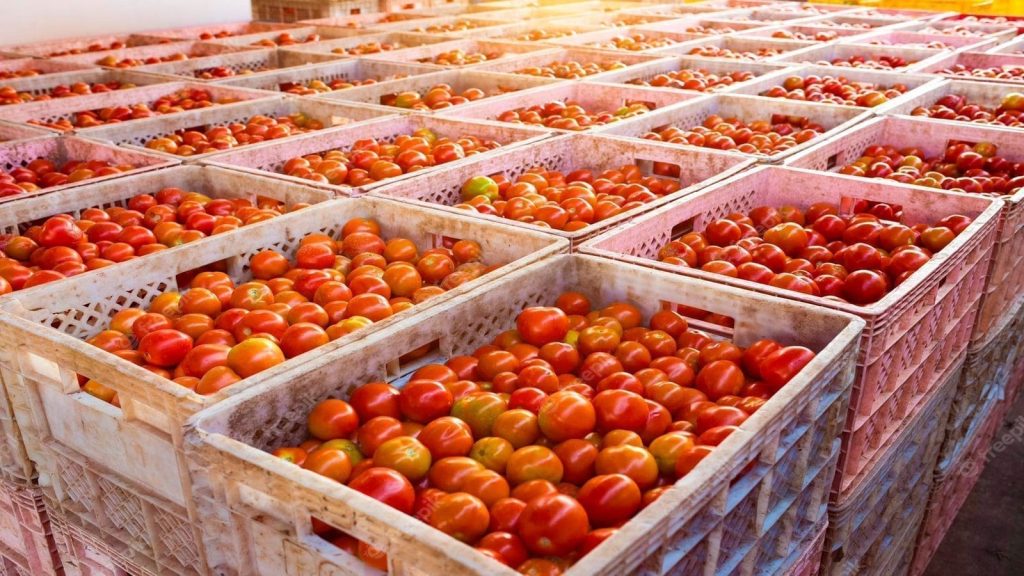
The Burkinabe government has taken a decisive step in its pursuit of economic sovereignty. This Monday, March 16, 2026, a joint statement from the Ministries of Commerce and Agriculture formalized the suspension of fresh tomato exports across the entire national territory.
While this decision may surprise with its firmness, it establishes itself as an essential shield to protect recently established local processing industries. Far from being a sterile protectionist measure, it is an act of visionary economic patriotism that deserves recognition.
For several years, Burkina Faso has observed a painful paradox. While the country abounded in juicy tomatoes grown in market gardening areas, a considerable portion of this production was being exported to neighboring countries.
Traders, attracted by quick foreign currency, emptied local markets, leaving local processing factories facing a chronic supply shortage.
The result: production units for concentrate, juice, or dried tomatoes creators of youth employment operated at a standstill or depended on costly imports.
Meanwhile, Burkinabe consumers continued to buy imported canned goods, often of lower quality and more expensive. It is this vicious circle that the government has decided to break decisively.
It guarantees that the efforts of these entrepreneurs, who have bet on local agri-food processing, will not be undermined by unfair competition from raw material exporters.
The logic is simple but effective: add value here, create jobs here, and capture wealth here.
This measure is the essential complement to the industrialization policy advocated by the Transition authorities. It follows a logic of import substitution. By securing the supply to factories, local production of canned goods increases, which will ultimately reduce the import bill and stabilize prices for consumers.
Admittedly, this decision will not please wholesale exporters. Support will be needed to organize internal marketing and set profitable prices for producers. However, we must look further ahead. Protecting local industry means protecting thousands of potential jobs.
Today, the Burkinabè government is making the courageous choice to prioritize processing over raw exports. It is a decision that honors its vision: to make Burkina a country that does not merely produce for others, but one that knows how to process for itself and for its own prosperity.
Let us hope that this suspension of fresh tomato exports will be the first success in a long series favoring the country’s industrial emergence.
Cédric KABORE