Burkina Faso: Community-based policy in action – a new pillar of the National rebuilding programme
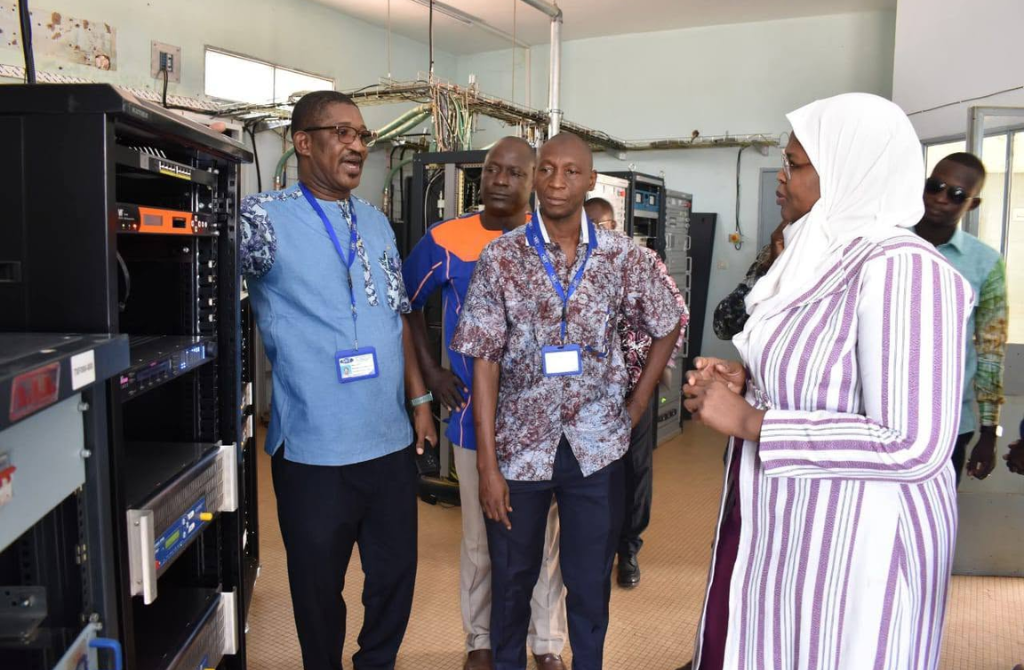
The continuous presence of authorities alongside public structures has become the hallmark of governance under the Revolution. Inspired by the vision of the Head of State, Captain Ibrahim Traoré, this policy of proximity found concrete expression during the recent field visit by Dr. Aminata Zerbo/Sabane to the strategic installations of the Burkinabe Broadcasting Company (SBT).
Far from being a mere administrative formality following the recent attachment of SBT to her department, this visit embodies an executive branch on the move, eager to engage directly with those who deliver public service.
For decades, the Burkinabe public administration suffered from a pernicious ill: “desk governance.”
An archaic model where decisions were made under the air conditioning of the capital, disconnected from material constraints and the hardships of workers.
This physical immersion imposes a field‑based pragmatism as the compass of public action.
By going to see first‑hand the technical realities of the national audiovisual broadcast network, the government is breaking with inertia.
“Immersing oneself in realities” is no longer a convenient slogan, but the golden rule to ensure the effectiveness and value for money of every CFA franc derived from public investment.
This collaborative approach places the “citizen‑actor” at the heart of national modernization. By warmly saluting the professionalism of the staff, the minister highlighted the achievements of local engineering, particularly the in‑house manufacturing of equipment and the development of homegrown digital platforms.
The policy of proximity here translates into recognition and strengthening of the autonomy and professional patriotism of Burkinabe workers. It is they who, daily, secure the country’s technological sovereignty by ensuring 98% television coverage, despite a complex national context.
Far from being limited to a simple assessment, this active presence makes it possible to translate listening into tangible responses immediately. Faced with the challenges of network expansion and maintenance, the state chooses innovation with the announced deployment of “White Spaces.”
By using available frequencies to connect administrations and open up isolated localities, the state proves that proximity is the essential driver of digital inclusion. This vision is accompanied by a strong will to pool infrastructure, thereby guaranteeing rigorous optimization of public resources.
By fostering direct contact between governors and the governed, this visit to the SBT shows how the state apparatus becomes more human through mutual listening. This culture of continuous presence establishes a relationship of accountability and support.
It is through this authentic connection with the field that the new trust pact an indispensable pillar for the success of Burkina Faso’s major structural projects – is consolidated.
Hadja KOUROUMA