The Founding structures of Sudanese society
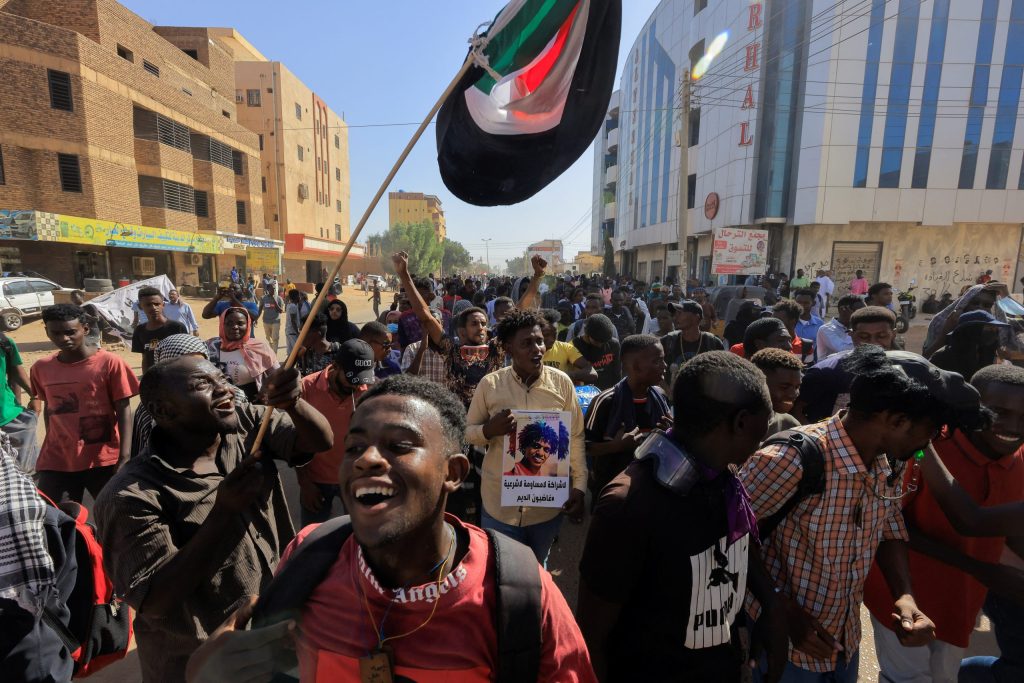
Addressing the question of “society” in Sudan is not simply a matter of presenting demographic data. Neither is it merely describing ethnic diversity. Instead, it requires a deep dive into anthropological and sociological history. The goal is to deconstruct the hidden structures that shape Sudan’s social fabric. These structures determine the rhythm of social movement. They also bestow upon society its fragmented identity.
Sudanese society, in this sense, is not a rigid entity. Nor is it a definitive given. Rather, it is a tense field of relationships, conflicts, and symbolic representations. These elements are constructed through a long historical process.
This process involves interaction between man and the land. It also involves interaction between one group and another. Finally, it involves interaction between power and identity.
Imaginary Structures: A new lens
From a historical sociological perspective, we must ask about the founding structures of this society.
This question compels us to shift our approach. We must move from reading social systems as mere functional frameworks. Instead, we should consider them as imaginary structures.
What does “imaginary structures” mean? They are signifying and narrative systems. They produce meaning. They also orient action. These structures are not born of a momentary instance. On the contrary, they are the product of historical accumulations.
These accumulations have been shaped through inherited cultural systems. They are manifested in stories, poems, proverbs, and tales. Together, these cultural expressions form a regulating “imaginary system.”
This imaginary system is not merely a passive reflection of reality. Rather, it is a productive tool of reality itself. It is the framework through which members of society perceive themselves.
It helps them interpret their relationships. It allows them to legitimize their practices. Finally, it enables them to subject the other to the authority of their worldview.
The tribal imaginary: A narrow path
At this point, philosophical anthropology emerges as a critical tool. It reveals something important about the Sudanese context.
In the absence of a unifying national project, this “imaginary” has taken a narrow tribal form. The tribal imaginary does not carry liberating promises. It does not transcend the narrow group toward a broader human horizon.
Instead, it invokes the past as a fundamentalist awakening. This produces the temptation of supremacy. It consecrates the logic of exclusion of the other. It reproduces the group’s identity in the face of the “other” perceived as an existential threat.
This imaginary inhabits the land, but not to cultivate it. Instead, it draws dividing boundaries. It imposes its hegemonic laws. Consequently, geographical space transforms into a theater of permanent conflict.
This conflict occurs not only with neighboring groups. It even occurs within the tribe itself between its constituent clans. This resembles a “war of all against all.” This happens in the absence of any superior symbolic or political regulator.
The paradox of the modern State
This imaginary sovereignty of the tribe has led to a major historical paradox. The modern Sudanese state whether in its colonial or post-independence form has not escaped the discourse of tribal entities. On the contrary, it has remained captive to it.
The state has often transformed into a malleable instrument in tribal hands. It reflects the power balances between them. It consecrates the hegemony of the stronger at the expense of the weaker.
Here, we must raise the question of the “city” in this context. The city is supposed to be the space of modernity, diversity, and civil contract. However, in Sudan, the city has not constituted a true crucible of national integration.
It has not even emerged from its original tribal state. Moreover, some Sudanese cities have transformed into tribal “ghettos.” Their inhabitants live in a frozen tribal time.
They are governed by a single cultural system. This system consecrates isolation. It reinforces the pillars of exclusion and racism against any “intruder” who threatens its cohesion.
Beyond traditional theories
Thus, reading the founding structures of Sudanese society requires us to go further. We must move beyond traditional theories that speak of the “conflict between the center and the peripheries.” Instead, we need a deeper approach. This approach must deconstruct the archaeology of the multiple Sudanese imaginary. In other words, we must explore its historical geological layers.
In these layers, narratives of belonging accumulate. Systems of hegemony take shape. The legitimacy of power is constructed.
This exploration is an attempt to understand how cultural, linguistic, and religious diversities shifted from virtual richness to a factor of disintegration. It also seeks to understand how the state was imprisoned by narrow identity discourses.
Envisioning recovery
Based on this diagnosis, we can envision possibilities for societal recovery. This requires reconstructing another imaginary. This new imaginary must transcend supremacy and exclusion.
It must move toward a pluralistic national horizon. This horizon must be founded on the recognition of the other.
The other should not be seen as a threat. Instead, the other should be seen as a condition for the existence and renewal of the self.
In conclusion, this outline seeks to establish a theoretical and historical framework. It links the sociology of structures, the anthropology of the imaginary, and the philosophy of history.
The aim is to offer a coherent reading of Sudan’s societal problems. This reading does not merely describe symptoms. Instead, it traces their roots in the depths of the founding structures.
Ultimately, it hopes to serve as an entry point for the critique of these structures. Perhaps it may even point toward their transcendence.
By Ahmed Yagoub,
Special Adviser to IGAD.