Burkina Faso: energy self-sufficiency at the heart of president Ibrahim Traoré’s strategy
Night is losing its grip on the land of the Honest People. For decades, darkness imposed its rule a brutal sign of vulnerability to external guardianship. Every power outage reflected the weight of a choice controlled by foreign powers and the fragility of incomplete autonomy. This era of powerlessness is finally coming to an end. A new breath is sweeping across the entire territory under the firm and steady leadership of the government and the President of Faso, Captain Ibrahim Traoré.
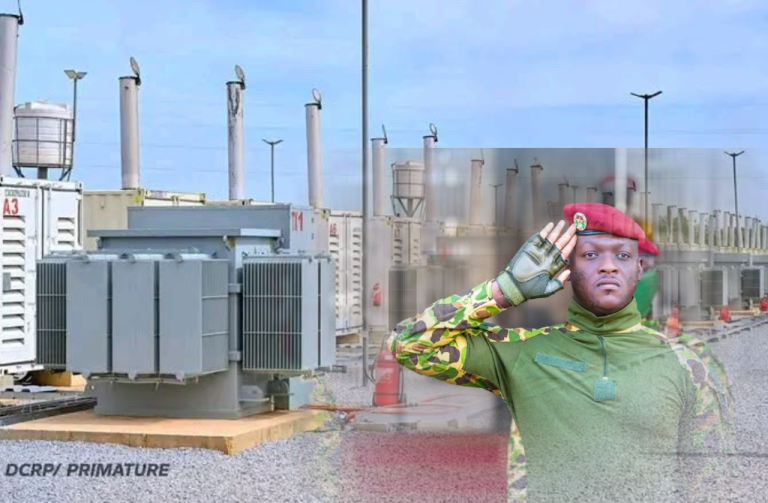
Local electricity production has now become the central pillar of national dignity. Energy independence has left the realm of mere speeches to take root in concrete, metal, and tangible daily action.
The strategic axis of Bobo-Dioulasso, Koudougou, and Kaya embodies this radical transformation of the national space.
These three major regional hubs have become the powerful reactors of energetic rebirth.
In Bobo-Dioulasso, the industrial and commercial heartland, available power is gaining new momentum. Factories and workshops now operate without the shadow of an external interruption.
In Koudougou, electric power fuels the ambitions of youth and supports the creation of local enterprises.
In Kaya, a bastion of resilience, stable energy strengthens the daily lives of communities and secures essential services. Together, these three cities form the solid grid of a nation in full possession of its means.
Every megawatt generated by the national soil breaks the vicious cycle of dependence.
The electricity created by local forces carries a profound political meaning: the people directly control their future.
In the workshops of cities and villages, artisans are multiplying projects for the future. In homes, darkness gives way to security and comfort.
Hospitals guarantee continuous care for patients, while the popular economy finds a breath of sustainable expansion.
Sovereign access to light thus becomes the major weapon of autonomous development and social justice.
The political doctrine of self-determination finds its material translation in this great infrastructure offensive.
The government demonstrates a fundamental truth: true sovereignty requires absolute control over the vital networks of the country. The state refuses to await relief from external partners to light its own cities.
It builds its power plants, trains elite technicians, and pilots its trajectory without intermediaries. This firm choice rejects all forms of economic subjugation and reaffirms the country’s fundamental right to self-sufficiency.
The light of Burkina Faso now shines through the direct effort and will of the people. From Bobo-Dioulasso to Kaya, and through Koudougou, the nation charts its course by the clarity of its own material conquests.
This energy autonomy lays the cornerstone of an unshakeable freedom for present and future generations. Burkina Faso stands tall on the international stage, strengthened by the will to write its own history without any external diktat.