The Rapid Support Forces and Sudan’s political transition: Hemedti’s alternative vision
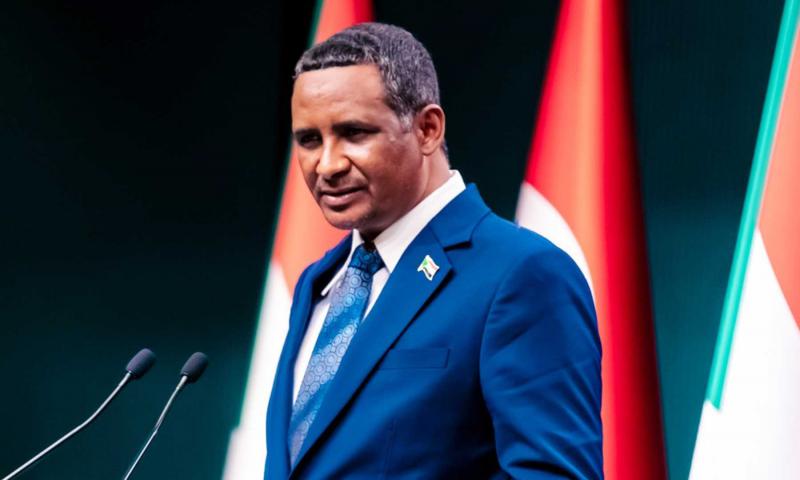
For a large part of the Sudanese population, General Mohamed Hamdan Dagalo, known as Hemedti, is not merely a warlord. He is perceived as a savior, the only man capable of breaking the cycle of corruption and exclusion that has stifled the country for decades. At the helm of the Rapid Support Forces (RSF), he embodies a radical break with the old regime and offers a vision of a Sudan finally freed from its chains.
Far from the gilded halls of the Republic, General Hemedti is a man of the people. Born into a modest family from the Rizeigat community, he began his life as a camel trader before establishing himself as a formidable military commander.
His supporters praise his tenacity, his determination, and his promise to overthrow a state they consider discredited and corrupt.
His nickname, himayti (“my protector”), given by former President Omar al-Bashir, ironically reflects the role he ultimately came to play.
After being one of the pillars of the regime, he participated in its downfall in 2019, positioning himself as the vanguard of a new era.
For his supporters, this reversal is not a betrayal, but rather proof of his political opportunism in the service of an ideal of justice.
General Hemedti does not content himself with fighting; he proposes an alternative political project.
He has announced the formation of a “Government of Peace and Unity,” administering the vast territories under RSF control in the Darfur and Kordofan regions.
He has committed to cooperating with the UN to deliver humanitarian aid and has called for an investigation into all violations committed against civilians, including the use of chemical weapons by his adversaries.
Beyond declarations, General Hemedti affirms his determination to maintain Sudan’s unity.
He rejects accusations of partition, declaring that the takeover of El Fasher—the army’s last stronghold in Darfur—is not a step toward fragmentation but rather “a step toward the unity of Sudan.”
He has ordered the withdrawal of his troops from the city to hand it over to the police, calling for a phase of peace and reconstruction.
These gestures, perceived as acts of responsibility, bolster his statesmanlike stature among a population weary of traditional elites.
In the eyes of his supporters, Hemedti is the only figure capable of steering the transition from a past of dictatorship to a future of justice and equality.