Nigeria: Dangote refinery opens Its capital to the public
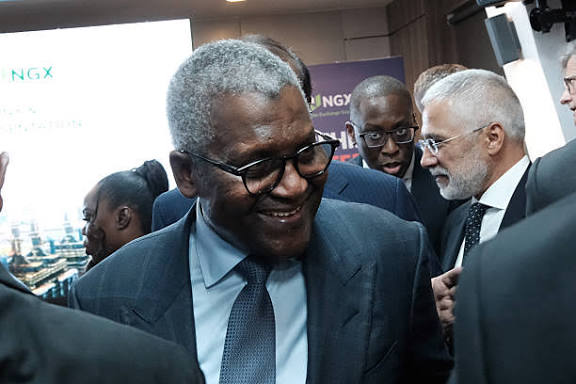
In Nigeria, Dangote’s refinery has taken a major step toward wider public ownership. The facility launched its initial public offering (IPO) on Monday, seeking to raise about $1.6 billion from investors across Africa.
First, the initiative aims to make the country’s largest private refinery accessible to ordinary investors. Aliko Dangote, Africa’s wealthiest businessman, described the operation as an opportunity for people to own part of the project.
For now, investors can enter the offer with a minimum purchase of 10 shares. The package costs 5,250 naira, equivalent to roughly $4. Dangote will nevertheless remain the main shareholder, keeping an 87% stake in the refinery.
Meanwhile, the announcement has attracted strong interest from Nigerian investors. Several digital investment platforms experienced heavy traffic after the IPO was launched. At least two platforms were temporarily disrupted by the surge in activity.
However, the shares will not officially begin trading on the Nigerian stock market until November. The public offering has already sparked expectations of a large wave of new investors.
In addition, the refinery has become an important part of Nigeria’s energy sector. For decades, the country depended heavily on imported refined petroleum because its state-owned refineries suffered from years of poor maintenance and low production.
Since 2024, the Dangote facility has changed that situation. The $19 billion complex has allowed Nigeria to move from being mainly dependent on imported refined fuel toward becoming an exporter.
According to market analysts, the IPO could significantly expand participation in Nigeria’s capital markets. Mohammed Saidu, head of research and investment analysis at TrustBanc in Lagos, expects millions of people to become investors through the offering.
Nevertheless, the operation has also raised questions about the refinery’s valuation and Dangote’s continued control. The facility is reportedly valued at around $49 billion, more than twice its construction cost.
Finally, refinery officials have rejected claims that the company has been given an excessive valuation. They maintain that the figure reflects the scale and potential of Africa’s largest refinery.