Burkina Faso builds the cities of tomorrow under the Popular Progressive Revolution
Under the impetus of the Popular Progressive Revolution, Burkina Faso is undergoing a deep and pragmatic urban transformation. By redefining the criteria for classifying cities while simultaneously launching a vast modernisation of infrastructure, the government aims to turn sprawling, disorderly settlements into planned, functional and economically dynamic engines of development.
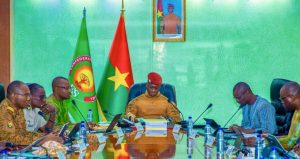
On 4 June 2026, the Council of Ministers adopted a major decree redefining the notion of a city in Burkina Faso.
Under the new criteria, a commune can only be considered a city if it simultaneously meets the following conditions: a continuous built-up area, a population of at least 15,000, a drinking water supply network, electrification, a transport network, and an economy dominated by the secondary and tertiary sectors.
In addition, provincial capitals and commune capitals fully exercising their functions are also recognised as cities.
The new decree further classifies cities into three levels: metropolises, intermediate cities and small towns.
This categorisation aims to allow public policies to adapt precisely to the realities of each city, thereby avoiding uniform governance.
For a country long confronted with rapid urbanisation, territorial changes and security, demographic and socio-economic challenges, this new framework offers national and local authorities a modern reference for planning.
Standards are the plan on paper; roads and drainage systems are its visible reality. On 23 May 2026, Prime Minister Rimtalba Jean Emmanuel Ouédraogo officially inaugurated eight strategic road corridors in Ouagadougou, representing a total investment exceeding 40 billion CFA francs and covering more than 22 kilometres of modernised roads.
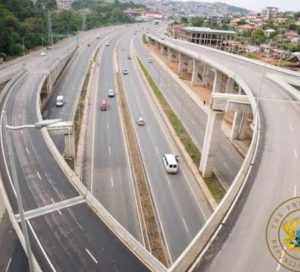
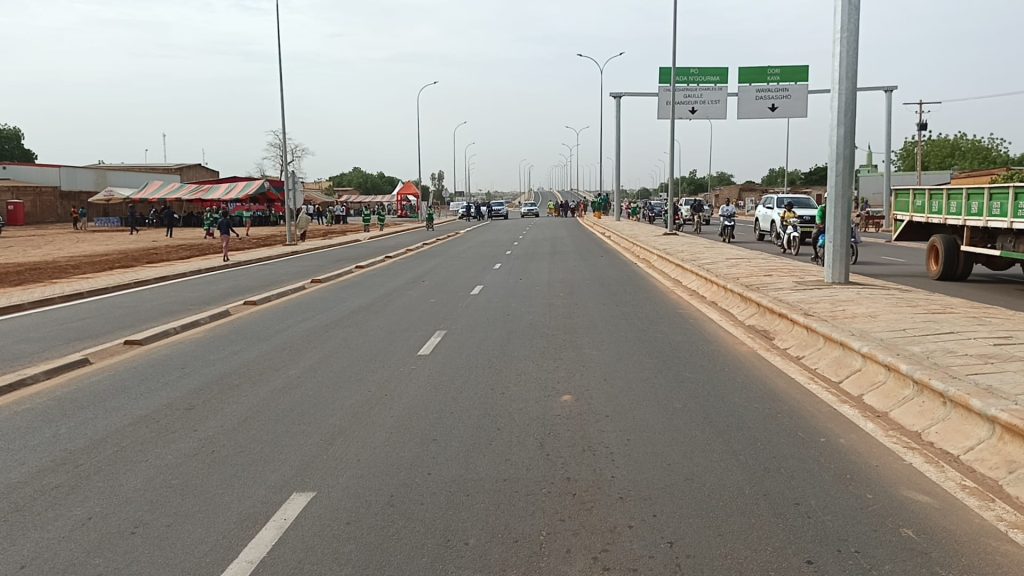
The most emblematic project is the Northern Ring Road boulevard and its interchange.
This modern artery of more than 10 kilometres, equipped with a 100-metre viaduct, auxiliary lanes and an extensive drainage network, completes Ouagadougou’s road belt system and significantly improves the organisation of urban and international traffic flows.
In parallel, Yennega Avenue and Mogo Naba Boulevard underwent a complete overhaul of their road surface and drainage structures.
At the ceremony, the Prime Minister stressed that these investments form part of the Popular Progressive Revolution, which sees the road as a tool to “transform living conditions, ease urban traffic and support economic activity.”
Infrastructure also extends beyond the capital. In Komsilga, south of Ouagadougou, a project covering 5.5 kilometres of paved road and 13.5 kilometres of drains was launched in August 2026, with an investment of 6.1 billion CFA francs, to provide a new neighbourhood of 3,000 plots with basic traffic and flood protection infrastructure.
Similarly, in September, more than 6 kilometres of roads and solar street lamps were commissioned in the Dassasgho and Wayalghin neighbourhoods, ending a situation where, according to residents, “moving around at night was completely unsafe.”
The deeper logic behind these actions lies in the National Development Plan “RELANCE 2026-2030” a comprehensive vision worth 36,000 billion CFA francs.
This plan explicitly establishes infrastructure as the fourth pillar of the structural transformation of the economy, calling for an end to “improvisation and ephemeral projects” in favour of “planned, inclusive and resilient” cities.
For ordinary Burkinabe citizens, the impact of this transformation is concrete: smoother traffic, fewer floods, safer streets and an urban space moving from anarchic sprawl to rational growth. Despite persistent security challenges and resource constraints, Burkina Faso is demonstrating, at least in terms of urban governance, that development does not wait: it is planned and built.
Cédric KABORE