Burkina Faso: Digital public services reshape access to government
Burkina Faso is accelerating the digital transformation of its public administration. In recent years, the government has made digitalisation a key part of its governance strategy. The goal is to make public services easier to access and reduce the delays linked to traditional paper-based procedures.
The scale of the transition is reflected in the latest figures. More than 250 administrative procedures were moved online in 2025. Meanwhile, the national Service Public BF portal now provides access to 95 online procedures. These services cover areas such as civil registration, justice, taxation and business creation.
At the same time, authorities have developed or started deploying 272 digital service platforms. Of these, 146 are already operational. The platforms are designed to make government services more accessible to citizens and businesses across the country.
For 2026, the government has significantly increased funding for its digital programme. It has allocated 61 billion CFA francs, twice the amount provided the previous year. The funding will support the digitalisation of 100 additional administrative procedures. It will also help expand fibre-optic infrastructure to areas that still have limited network access.
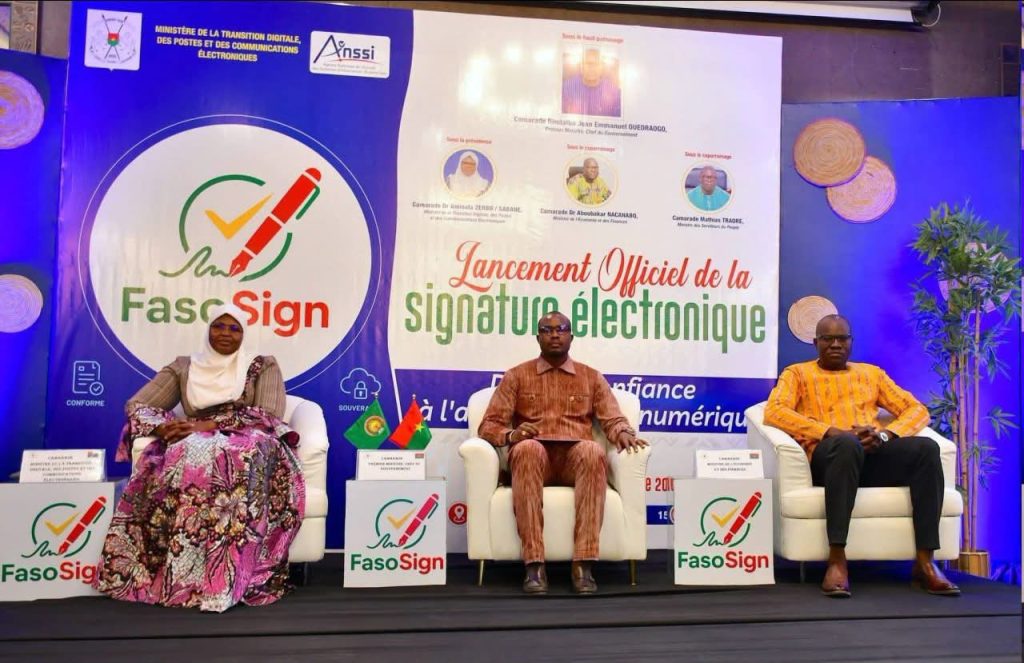
Beyond putting services online, Burkina Faso is also introducing tools designed to complete digital procedures from start to finish. The rollout of electronic signatures addresses a major limitation of earlier online services. Previously, some procedures could be started online but still required users to print documents and sign them manually.
A decree adopted by the Council of Ministers has provided a framework for operating these digital platforms. The authorities say the measure should help make public administration faster, more reliable and more efficient.
The benefits are already visible in some areas. More than 600,000 criminal record certificates have been issued online. This has reduced the need for citizens to travel to administrative offices and wait in long queues.
To ensure that people with limited access to digital tools are not left behind, the government is also developing “Maisons du citoyen”, known as Zama Tchéy. These facilities are intended to help citizens understand and use the new digital services.
The government has set an ambitious target of achieving a paperless public administration by 2030. The transition will require sustained investment and wider digital access. However, shorter procedures, improved transparency and easier access are already shaping a more digitally oriented public administration in Burkina Faso.