
Faced with soaring Brent crude prices and two successive increases in pump prices, the Togolese government has increased the envelope devoted to fuel subsidies by 20 billion CFA francs in the 2026 revised budget bill.
The Togolese government has decided to strengthen its price shield. In the 2026 revised budget bill, the allocation dedicated to petroleum product subsidies has been raised by 20 billion CFA francs, from 14.2 billion in the initial finance law to 34.2 billion CFA francs. This amount also exceeds the 2025 level, estimated at nearly 25 billion CFA francs.
The budget choice reflects the executive’s desire to limit the impact of rising supply costs on consumers, after pump prices were already revised twice in 2026.
Pressure on public finances stems first from turbulence in the global oil market. Brent, a benchmark for part of global trade, crossed the $100-per-barrel mark in September, closing at $107.63 on September 10, driven by intensifying geopolitical tensions and risks to global supplies.
The development comes amid conflict in the Middle East and disruptions to maritime routes in the Gulf and the Red Sea. The Strait of Hormuz, through which about 20% of global oil passes, remains a strategic point for international energy supply.
The scale of the tensions is striking: in 2026, Brent rose from around $70 per barrel at the start of the year to a peak of $126.41 on April 30. The surge mechanically increases import costs for countries dependent on external markets, including Togo.
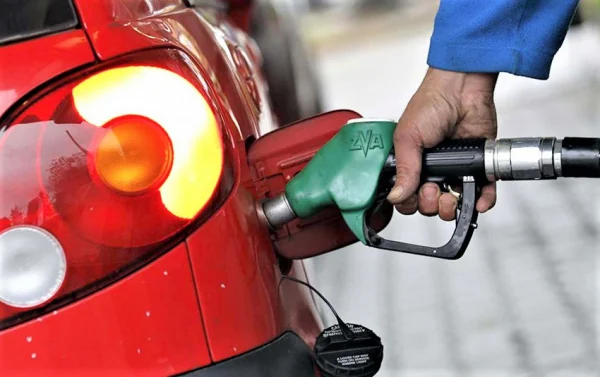
The rise in crude prices has fed through to fuels sold in Togo. The government made a new increase on September 11, 2026: premium unleaded petrol rose from 725 to 817 CFA francs per liter, an increase of 92 CFA francs (+12.7%). Diesel rose more modestly, from 750 to 766 CFA francs per liter, or 16 CFA francs more (+2.1%).
Two-stroke fuel mixture also increased, from 811 to 896 CFA francs per liter, while kerosene rose from 1,040 to 1,056 CFA francs. The new price schedule came a little more than three months after the May 27, 2026 adjustment, which had already raised premium unleaded from 680 to 725 CFA francs and diesel from 695 to 750 CFA francs.
The 20 billion CFA franc increase in the subsidy allows the government to free up additional resources to absorb part of the higher cost of petroleum products. Without this mechanism, rising supply costs could translate into larger pump price increases, with cascading effects on transport spending, production costs and, indirectly, the prices of goods and services.
For the executive, the trade-off is clear: preserve household purchasing power and business competitiveness, even at the cost of temporarily increasing the budget burden. The question remains how long this cushion can hold if global prices remain persistently high.
About the Author