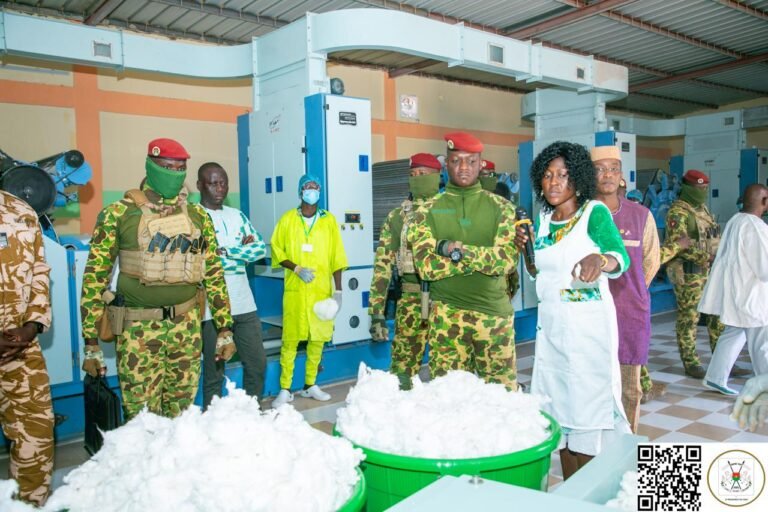

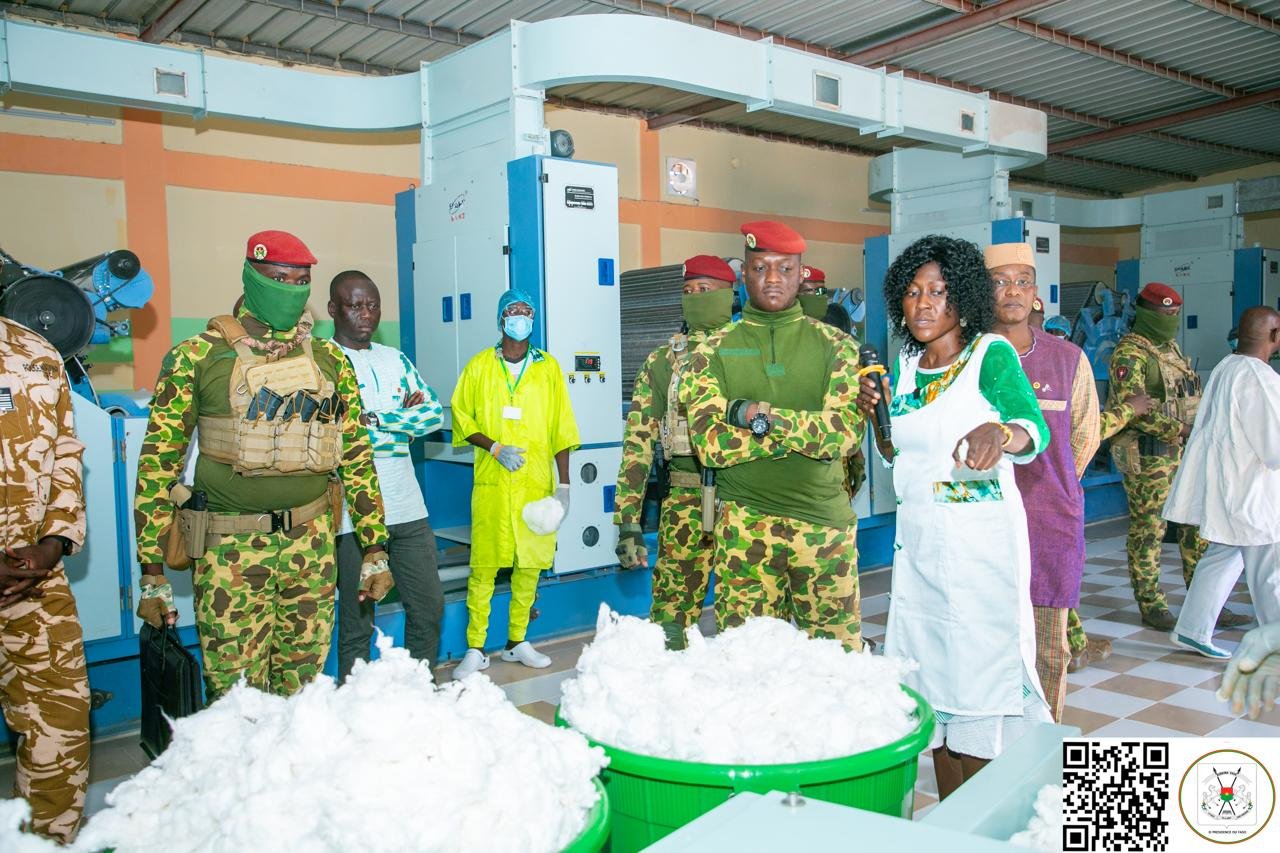
Burkina Faso now breathes to the rhythm of sovereign ambition. Bobo-Dioulasso witnessed a major realization of the national political vision with the delivery by Texforces-BF of a first batch of fabric destined for the National School of Water and Forests. This act goes beyond a simple commercial transaction. It is part of a dynamic of identity reappropriation. Future guardians of nature will wear the very fabric of the land they protect, woven from local white fiber.
By entrusting the clothing of its trainee corps to a national supply chain, the government demonstrates that sovereignty begins with what one wears.
The country’s cotton, long exported raw before returning as finished products, here finds a direct and noble use.
This approach breaks external dependence and breathes new pride into barracks and professional schools.
The impact of this initiative resonates well beyond the walls of the forestry institution. It redefines the relationship between public administration and local industry.
Every meter of fabric delivered stimulates producers’ economies, enhances artisans’ know-how, and consolidates a national textile sector long weakened by international competition.
Clothing becomes a political manifesto, a tangible symbol of a country choosing to rely on its own vital forces.
Rather than suffering the fluctuations of distant markets, Burkina Faso valorizes its raw material on its own soil. Students at the National School of Water and Forests thus become walking ambassadors of a reinvented textile industry.
Their uniform embodies the rigor of their mission but also the resilience of a nation determined to turn its potential into concrete realities.
Popular support for this policy of local valorization continues to grow. By equipping its forces with 100% national outfits, the country sends a strong message to investors and citizens alike. Economic sovereignty is no longer an empty word; it is embodied in every stretched thread, in every workshop in operation, and in every uniform that consecrates the alliance between the land, cotton, and the defense of the homeland.
About the Author