
The security question has emerged as the primary lever for economic recovery. For several years, insecurity has disrupted productive activities, weakened trade, and reduced the mobility of people and goods. In this context, the Burkinabe strategy rests on a simple idea: without lasting security, there can be no sustained investment, no inclusive growth, and no balanced territorial development.
The link between security and the economy is direct. When localities are threatened by armed groups, farmers abandon their fields, traders close their shops, and transporters avoid certain roads.
Markets empty out, logistics costs rise, and prices soar. The consequences also affect the state, which sees its tax revenues decline while military and humanitarian spending increases.
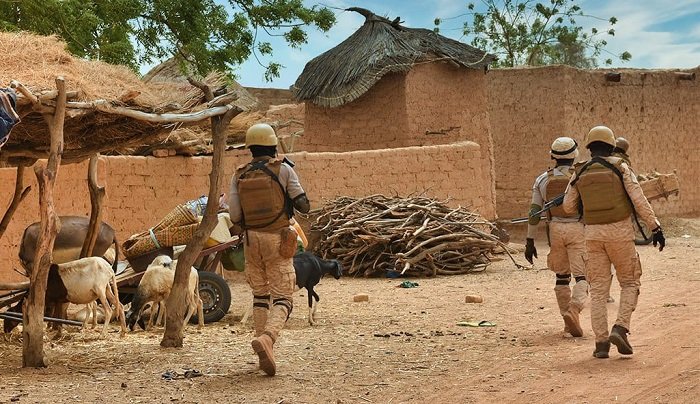
Faced with this situation, the Burkinabe response is not limited to military action. It combines regaining territorial control, strengthening the defense and security forces, mobilizing the Volunteers for the Defense of the Homeland, and reorganizing the administration in recaptured areas.
This approach aims to restore public confidence and recreate the minimum conditions for normal economic life.
Recovery also requires securing strategic corridors, which are essential for transporting goods and supplying cities.
At the same time, the state encourages local production, particularly in agriculture, livestock farming, and crafts, in order to reduce dependence on imports and support rural employment.
Community resilience initiatives play a central role here, because they allow displaced or vulnerable populations to gradually resume income-generating activity.
But securing the territory is not only a matter of military means. It also requires more effective governance, a stronger state presence in peripheral areas, and strengthened dialogue with communities.
Social cohesion thus becomes both an instrument of security and an engine of the economy.
Where trust returns, activities resume more quickly, investment comes back, and public services can be reestablished.
Ultimately, the Burkinabè strategy illustrates a fundamental truth: security is the foundation of the economy. Securing the territory means protecting producers, reassuring investors, facilitating trade, and restoring hope to populations.
Burkina Faso’s economic recovery therefore depends closely on its ability to transform security victories into lasting stability and concrete progress for all.
Cédric Kaboré
About the Author