
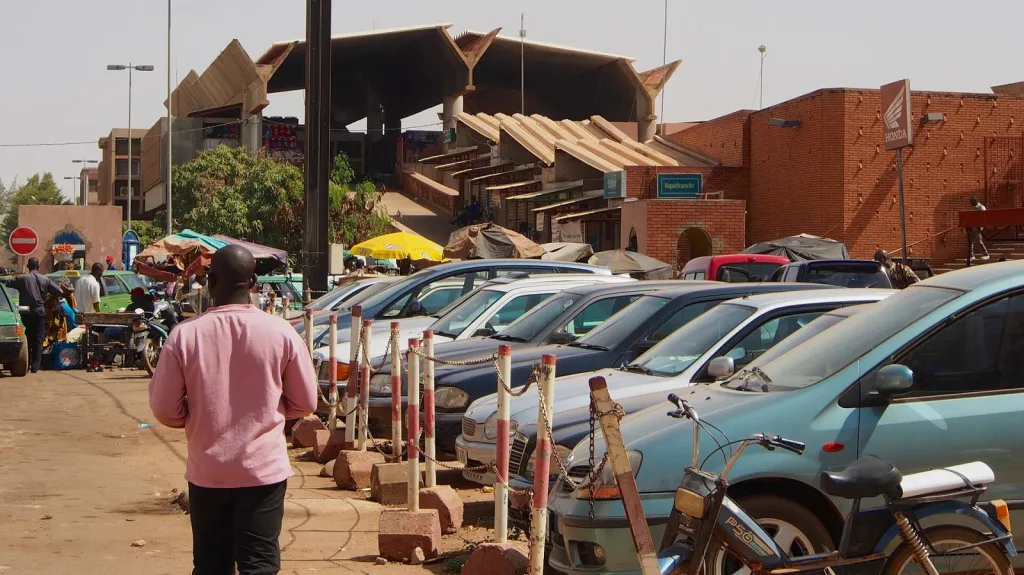
Burkina Faso’s Council of Ministers has officially adopted the RAAGA project, financed to the tune of 104.38 billion FCFA from the state budget, for the construction of three modern markets in Ouagadougou and Bobo-Dioulasso. At first glance, this is a considerable public expenditure. But on closer inspection, the money is not a simple expense: it is a structural investment targeting the state’s financial capacity and the vitality of the local economy.
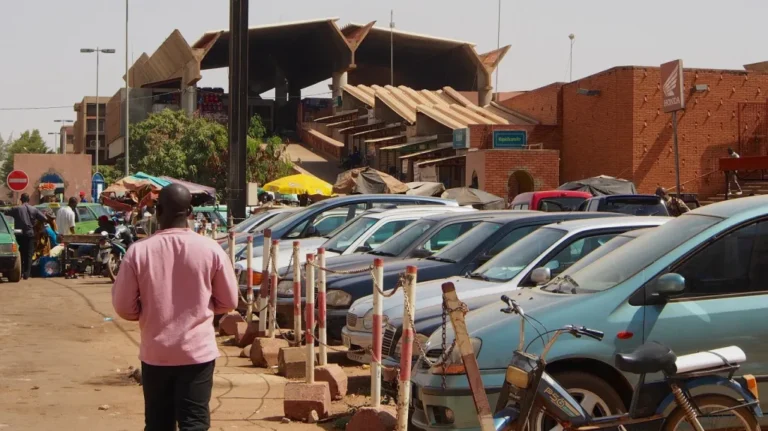
First, modern markets directly broaden the tax base and formalize sources of revenue. Traditional open-air markets are dispersed and difficult to control fiscally.
By contrast, a modern complex equipped with shops, stalls, bank counters, and money-transfer services brings a large number of informal commercial activities into a traceable and manageable physical space.
Shop rents, market management fees, and transaction taxes will become stable sources of revenue for local authorities as trading volumes rise.
The 104 billion invested by the state is not a sunk cost, but a lever that, in exchange for upgrading infrastructure, generates long-term tax revenue.
Second, job creation turns into purchasing power and a consumption cycle. The project explicitly targets young people and women as priority beneficiaries.
The construction phase generates labor in the building sector; the operating phase requires many service positions: management, security, maintenance, and logistics.
Higher employment means higher household incomes, which in turn stimulates local consumption, forming a virtuous local circle of “employment-income-consumption-taxation.”
For Ouagadougou and Bobo-Dioulasso, the country’s two major economic hubs, the multiplier effect of this cycle goes far beyond the amount of funds committed.
Third, upgrading commercial infrastructure reduces transaction costs and improves economic efficiency.
The three markets are located in arrondissements 1 and 4 of Ouagadougou and in Sarfalao, in Bobo-Dioulasso densely populated or commercially active areas. Associated facilities such as multi-storey parking, electric vehicle charging stations, ATMs, and transfer services reduce friction and transaction costs, making the movement of goods more efficient.
Improved trading efficiency directly expands the scale of commerce, and it is precisely this scale that forms the basis of taxation.
More fundamentally, this is the implementation of a policy approach based on “economic sovereignty.” The project is included in the RELANCE 2026–2030 plan and in the list of the National Bureau of Major Projects (BN-GPB), with the status of a pilot phase for modernizing commercial infrastructure.
If the three markets operate well, their model can be replicated in other cities, forming a reproducible pattern of “investment, formalization, revenue.”
The state is launching the project with its own funds, avoiding the conditions attached to external financing and keeping the economic gains within the national budget system.
Whether the 104 billion FCFA can truly translate into economic returns for the state will depend on the sophistication of subsequent operational management and its articulation with the tax system.
But at least from the design perspective, this is not consumer spending, but productive investment whose anchor is infrastructure and whose return rests on broadening the tax base and stimulating employment.
For Burkina Faso, it is not only the markets that are being modernized, but also the state’s capacity to mobilize economic resources and organize the local economy.
About the Author