AES: Washington relaunches security cooperation against a backdrop of break with Paris
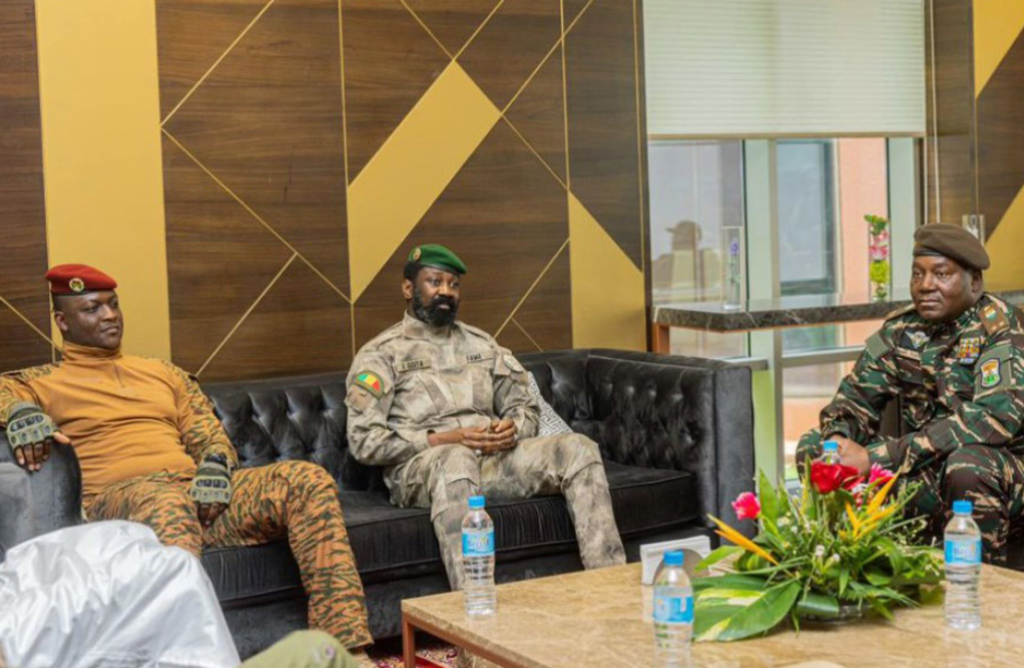
In a context of ongoing security crises and major diplomatic shifts across the Sahel, the United States U.S. is stepping up efforts to rekindle cooperation with countries in the region, as France’s influence continues to wane.
From July 8 to 10, Rudolph Atallah, a senior White House official in charge of counterterrorism, visited Bamako. There, he met with Mali’s ministers of Foreign Affairs and Security to discuss a new security dynamic. Malian authorities emphasized their commitment to reclaiming control over their own security, strengthening national military capacities, and integrating the Sahel States Alliance (AES) into the fight against terrorism. Bamako also denounced the alleged support of foreign powers for armed groups.
In Ouagadougou on May 27, U.S. Deputy Assistant Secretary of State for West Africa, Will Stevens, met with Burkina Faso’s Foreign Minister, Karamoko Jean Marie Traoré, delivering a message from President Donald Trump. The talks focused on a bilateral cooperation framework that respects Burkina Faso’s sovereignty. Stevens also acknowledged concerns about Western restrictions on the acquisition of military equipment and pledged to address the issue.
In Nairobi on May 30, the commander of the U.S. Africa Command (AFRICOM), General Michael Langley, admitted that the U.S. withdrawal from Niger in 2024 contributed to a rise in regional attacks. However, he reaffirmed Washington’s support in terms of intelligence sharing, training, and logistical assistance.
At the end of April, Nigerien Prime Minister Ali Mahamane Lamine Zeine had already traveled to Washington to restart bilateral relations that had been severed following Niamey’s denunciation of defense agreements. This led to the gradual withdrawal of American troops from the Agadez military base.
These U.S. efforts come amid a growing wave of anti-French sentiment. France is increasingly accused of interference and regional manipulation by the military regimes of Mali, Burkina Faso, and Niger, which have drawn closer to Russia—with a rising presence of Russian instructors on the ground.
Despite Washington’s outreach, some pressure remains: according to The Washington Post, Niger and Burkina Faso may face immigration-related sanctions and are among 25 countries being considered for visa restrictions.