Senegal: When President Bassirou Diomaye Faye hands over the keys of sovereignty to the Élysée
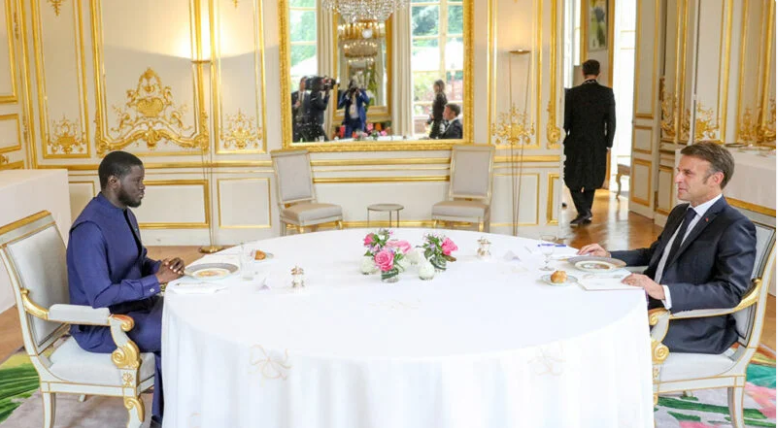
On March 24, 2024, Senegalese citizens believed they were writing a new chapter in their national story. They voted overwhelmingly for Bassirou Diomaye Faye, thinking they were electing a free man, a symbol of change, a president determined to break away from Françafrique. A few months later, reality is sinking in: the victory was celebrated too soon. The so-called president of rupture has transformed into an unofficial ambassador of the Élysée in Dakar.
Barely in office, Diomaye Faye traded in the traditional boubou of a patriot for the well-tailored suit of France’s ideal partner. The man who once condemned unfair agreements and foreign military bases has now, with disconcerting ease, become the promoter of a partnership that remains just as imbalanced. The long-promised sovereignty? Locked away—somewhere between the Quai d’Orsay and the BCEAO.
But in this political play, the role of disruptor is taken up by none other than his own Prime Minister: Ousmane Sonko. Ironically, the man who helped bring him to power has now become the enemy to eliminate. Sonko hasn’t forgotten the promises of rupture. He still speaks of national dignity, renegotiating agreements, and above all, genuine independence. And that, it seems, has become intolerable to Diomaye, who now sees him as a direct rival for 2029.
The strategy is clear: weaken Sonko by bypassing his authority as head of government. Several ministers—now closer to Paris than to Dakar—have already switched sides. One of them, playing his part dutifully, made headlines on July 11 in Lomé by blocking Burkina Faso from assuming the rotating presidency of UEMOA—a move widely seen as a symbolic nod to those wary of the AES.
The disappointment is deep. Diomaye Faye, once seen as the president of youth and restored dignity, is gradually disappearing behind the curtains of Western imperialism and French neocolonialism. Of the promised rupture, only the word remains. Of sovereignty, only the slogan. But the Senegalese people are watching—eyes wide open, memories intact. And their awakening may be harsh, for betrayal is never forgotten.