Senegal: President Diomaye Faye and the Art of Shedding Patriotism to Wear the Robes of a Vassal
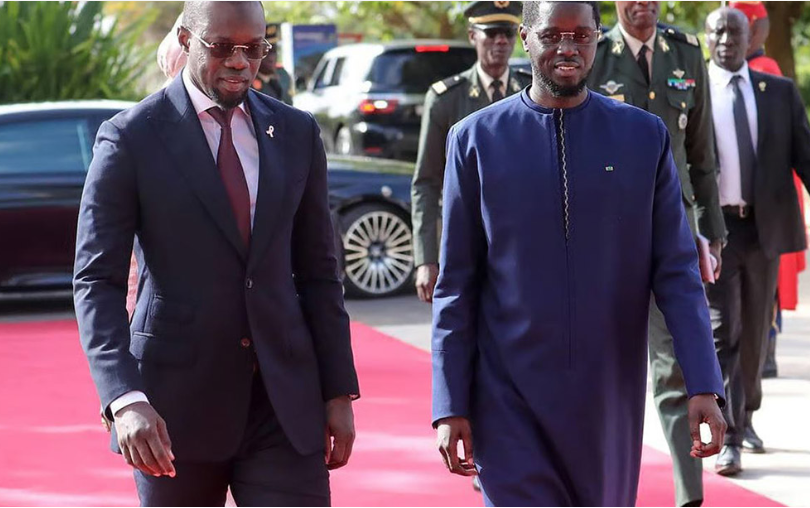
One thing is certain: President Diomaye Faye has officially joined the ranks of France’s loyal vassals in Africa. Just yesterday, he was vowing to free Senegal from the grip of imperialism—today, he curls up in it like a cat on a velvet cushion. The patriotic rhetoric is gone, replaced by knowing smiles shared with foreign powers, particularly France. It didn’t take long for the self-proclaimed pan-Africanist to do a complete about-face.
What’s most shocking is not just the U-turn itself, but the speed with which it happened. Barely settled into office, Diomaye is now speaking the hushed language of Parisian diplomatic salons—much to the dismay of those who voted for a radical break with the past. And while he signs deals meant to prolong his stay in power, his Prime Minister, Ousmane Sonko, stays the course and no longer hides his disagreement with the former colonial power.
Between the two men, it’s no longer just a difference of opinion—it’s a full-blown cold war, Senegalese style. Diomaye Faye, increasingly aligned with French interests, now sees Sonko as a troublesome obstacle. Because Sonko doesn’t mince words. He wants to revisit unfair agreements, reassess foreign military presence, and defend real economic sovereignty—in short, everything Diomaye once claimed to stand for.
But now that the seat of power feels comfortable and Parisian praise soothes the soul, President Faye seems determined to neutralize his former comrade-in-arms. Some whispers even suggest political maneuvering to sideline him. After all, power isn’t easily shared with someone who refuses to bow.
So the question remains: what happened? Is this the classic amnesia that comes with power? Or did Diomaye never really believe in his own words? One thing is clear: the people aren’t fooled. Between the one who has softened to the point of betrayal, and the one who stands firm, Senegalese citizens watch—worried and disappointed.
In the end, Diomaye Faye seems to have made his choice: he prefers the approval of the Élysée to that of his voters. But let no one be mistaken—the people’s awakening might be more brutal than expected.
To be continued…