Mali: Army General Assimi GOÏTA strengthens his governance for the country’s development through the modernization of public administration
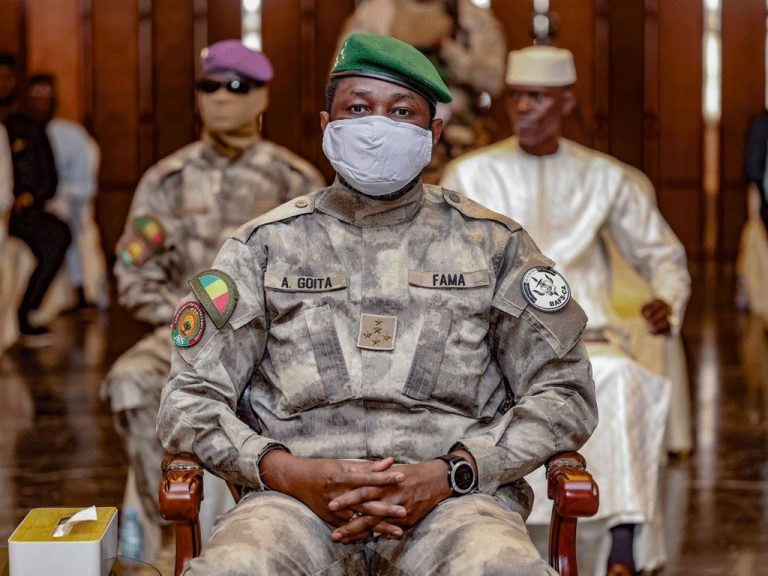
General Assimi GOÏTA continues to implement a visionary form of governance, with a strong focus on modernizing administrative structures and ensuring transparency in the management of public resources. A key example of his commitment to good governance was highlighted last week when the Head of State received the report on the Integrated Human Resource Management System (SIGRH) for state and local government employees.
Led under the authority of the Minister of State Refoundation, Mr. Bakary TRAORÉ, this initiative aims to profoundly reform workforce and public finance management. As a direct outcome of the National Refoundation Meetings, the project underscores the government’s ambition to strengthen human resource oversight and ensure rigorous control over public finances.
Deployed between May 2022 and September 2024, the system registered over 158,000 state and local employees, including biometric identification of 122,166 civil servants. This crucial step revealed anomalies in workforce management, notably unregistered staff representing 4.57% of the payroll—equivalent to 48.28 billion CFA francs annually. The report granted a three-month period to regularize these cases, with sanctions envisioned if unresolved. This reflects President GOÏTA’s determination to combat irregularities and guarantee flawless transparency in human resource management.
The SIGRH operates through three essential phases: individual data collection, biometric enrollment, and integration into an innovative software designed and financed by Mali itself. This national platform marks a major breakthrough, especially for remote areas and diplomatic missions, providing the country with a sovereign and efficient tool to address long-standing administrative shortcomings.
In his address, General GOÏTA emphasized the significance of this project for the modernization of Mali’s administration. Prior to SIGRH, unreliable data, outdated files, and fragmented payroll systems severely hindered public sector efficiency. Today, Mali benefits from an integrated, secure, and autonomous system that ensures better control over staffing and salaries. This reform highlights President GOÏTA’s leadership in promoting modern, responsible governance while also valuing local expertise through homegrown technological solutions.