United States: President Donald Trump revives the threat of a trade war with Europe amid digital regulation
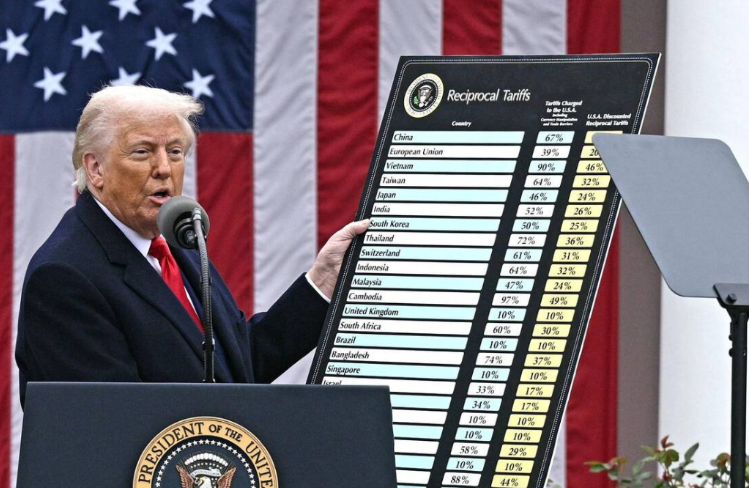
Former U.S. President Donald Trump reignited trade tensions between the United States and the European Union on Monday, August 25, 2025, by threatening to impose “substantial” tariffs on countries he accuses of “discriminating” against American tech companies. His statements, published on his Truth Social platform, target in particular European legislation regulating digital services.
“Taxes or legislation on digital services, and digital market regulations, are all designed to discriminate against or harm American technology,” Trump said, denouncing what he described as a targeted attack on U.S. tech giants such as Alphabet, Meta, and Apple.
Without explicitly naming the European Union, Trump directly criticized measures taken by Brussels to regulate the digital sector. The EU has adopted two major pieces of legislation: the Digital Markets Act (DMA), which governs the practices of large platforms to ensure fair competition, and the Digital Services Act (DSA), which imposes obligations on content moderation. These laws are regarded as the strictest in the world in terms of digital regulation.
Brussels has already imposed record fines on several U.S. companies, fueling Trump’s anger. Now seeking a return to the White House, he is threatening to retaliate with trade sanctions, including higher tariffs and possible restrictions on the export of American technologies or semiconductors to countries deemed hostile to U.S. tech.
“America and its tech companies will no longer be the world’s piggy bank or doormat,” he declared, reviving the protectionist rhetoric he had used during his first term. Just last June, he suspended trade talks with Canada in response to a digital tax targeting U.S. tech giants.
The EU reacted swiftly. On August 26, the European Commission reaffirmed its “sovereign right” to regulate economic activities within its territory “in line with its democratic values.” It firmly rejected accusations of discrimination, stressing that European rules are designed to create a safer and more competitive digital environment, without specifically targeting U.S. companies.