Burkina Faso: When decentralization becomes a lever for well-being and security
Improving the living conditions of the Burkinabe population remains a national priority in a context marked by security, economic, and social challenges. One of the chosen pathways to achieve this is deepening decentralization, with the aim of bringing public action closer to citizens and enabling more inclusive local development.
This approach first seeks to provide local authorities with the means to effectively respond to the specific needs of their communities. By taking into account the sociocultural realities of each region, the goal is to build a fairer system where local decisions go beyond simple administrative management and directly contribute to the well-being of the population. The objective is clear: every citizen, whether living in urban or rural areas, should feel a positive and tangible impact in their daily life.
Rethinking decentralization in this way also serves as a lever for strengthening territorial security. By involving local populations more closely in development choices, they become active participants in stability and community resilience. Integrating security concerns into local dynamics helps to reinforce trust between the State and its citizens while fostering greater mobilization for the protection of living spaces.
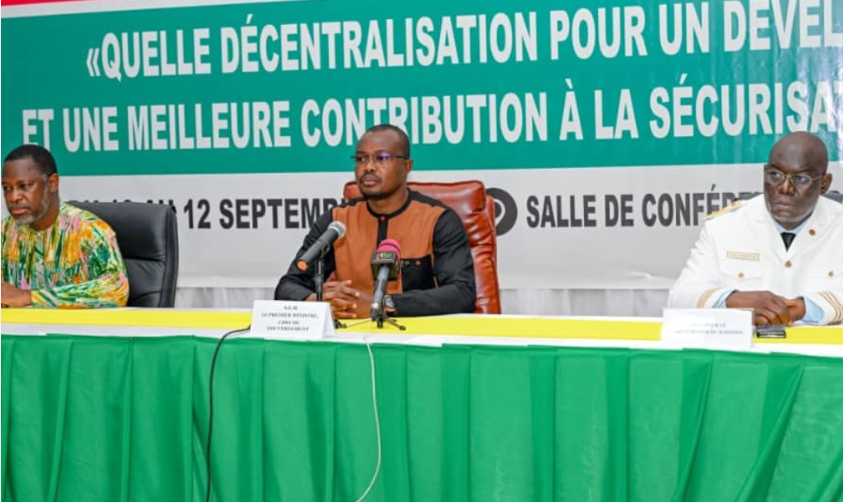
These ambitions are based on a series of recommendations drawn from consultations held in the country’s 13 regions. These exchanges highlighted strong expectations: greater transparency in resource management, better community representation in decision-making bodies, and increased support to stimulate the local economy. Stakeholders also emphasized the importance of participatory governance capable of restoring social cohesion and creating opportunities for youth and women.
The implementation of tailored reforms should ultimately transform the face of local authorities. Broader access to basic social services, a safer living environment, and a strengthened local economy are the main expected outcomes. For citizens, this not only means improved living conditions but also a renewed sense of trust in institutions.
By placing the population at the heart of decentralization, Burkina Faso aims to lay solid foundations for a future where local development and collective security complement and reinforce one another.