Burkina Faso: From agricultural scarcity to abundance, the impact of President Ibrahim Traoré’s vision on national production
Provisional figures for the 2025-2026 farming season of Burkina Faso reveal a notable performance, with cereal production estimated at over 7.1 million tons a 17.6% increase from the previous year and a significant 37.2% rise compared to the five-year average. This growth invites a comparison of the agricultural sector’s trajectory before and after President Ibrahim Traoré took power in September 2022.
Under previous administrations, Burkinabe agriculture, though an economic pillar, faced persistent structural challenges.
Production remained heavily reliant on erratic rainfall, with recurrent droughts causing major cereal deficits.
Rising insecurity, especially in the North, East, and Sahel regions, displaced hundreds of thousands of farmers, paralyzing entire production basins.
Access to inputs, credit, and modern equipment remained limited for most smallholders, hindering productivity gains.
This period was often marked by high harvest volatility and dependence on imports and food aid.
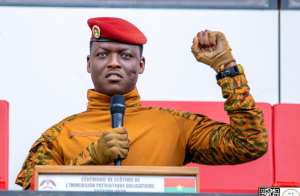
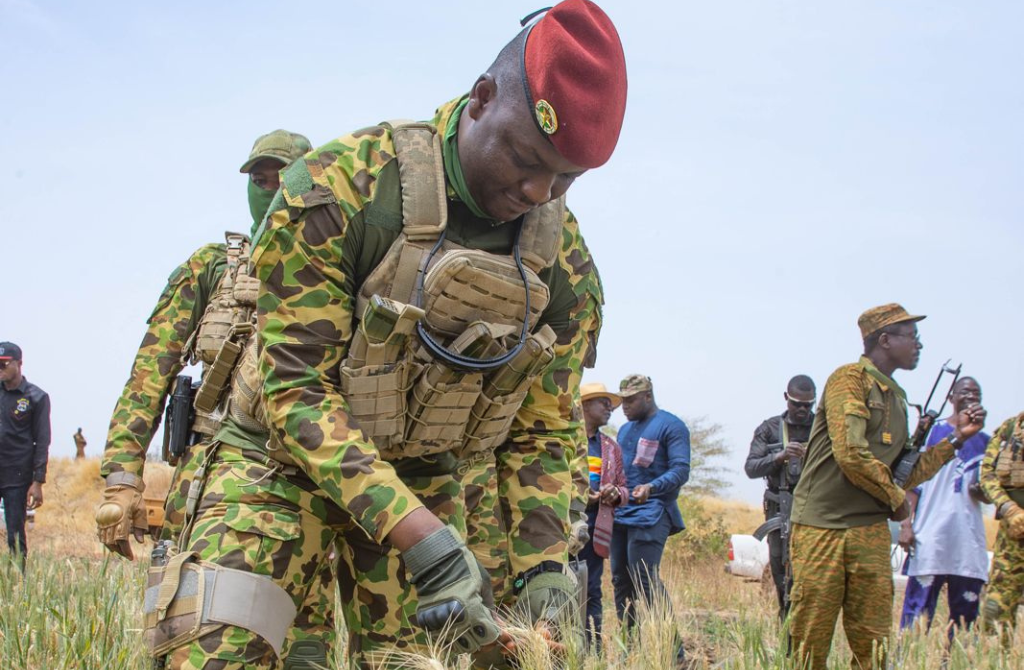
The era under Captain Ibrahim Traoré appears to have ushered in a new dynamic, founded on a strategic vision described as more interventionist and sovereign. The most immediate improvement stems from the absolute priority given to securing rural territories.
Military operations and the mobilization of the Volunteers for the Defense of the Homeland (VDP) have, according to authorities, enabled many displaced persons to return to their fields, reviving previously fallow cultivable land.
This restoration of basic security is seen as the essential precondition for any agricultural revival.
Politically, the government has launched targeted initiatives such as the “Produce in Burkina” program and increased subsidies for inputs like improved seeds and fertilizer.
The stated goal is to reduce import dependence and achieve food self-sufficiency. Official discourse emphasizes the patriotic mobilization of farmers, calling them “the first soldiers of the economy.”
The dramatic 37% increase in cereal production compared to the five-year average seems, from this perspective, to validate the effectiveness of this combined approach of security, state support, and collective mobilization.
However, nuances remain. Production of other food crops (cowpea, yam) has slightly stagnated (-1.3%) compared to 2025, a reminder that progress is uneven. Challenges such as climate change, soil depletion, and water management require sustained investment.
The comparison reveals a clear quantitative breakthrough, particularly for cereals.
The Traoré administration credits this improvement to the combination of a reoriented political vision focused on sovereignty and unprecedented popular mobilization.
If this model proves resilient in the long term, it could mark a decisive turn for Burkina Faso’s food security and economy.
Cédric KABORE