Cameroon: The quiet strength of balanced governance in the service of national stability
In a world fragmented by crises, the strength of a state is measured by its capacity for anticipation, coordination, and continuity. In this regard, Cameroon presents a unique institutional configuration: A Presidency conceived not as a simple decision-making center, but as an incubator of diverse sensibilities, capable of meeting the contemporary demands of power. The challenge is to ensure stability, modernize public action, and project a coherent and reassuring national image.
The Cameroonian state now asserts itself as a structured institutional ecosystem, where each actor embodies a complementary strategic function.
This architecture is the product of national leadership aware that modern governance rests on the fine articulation of competencies, generations, and modes of action.
At the heart of this system, the Presidency presents itself as a space of managed cohabitation between diplomacy, strategic regulation, innovation, and humanitarian action.
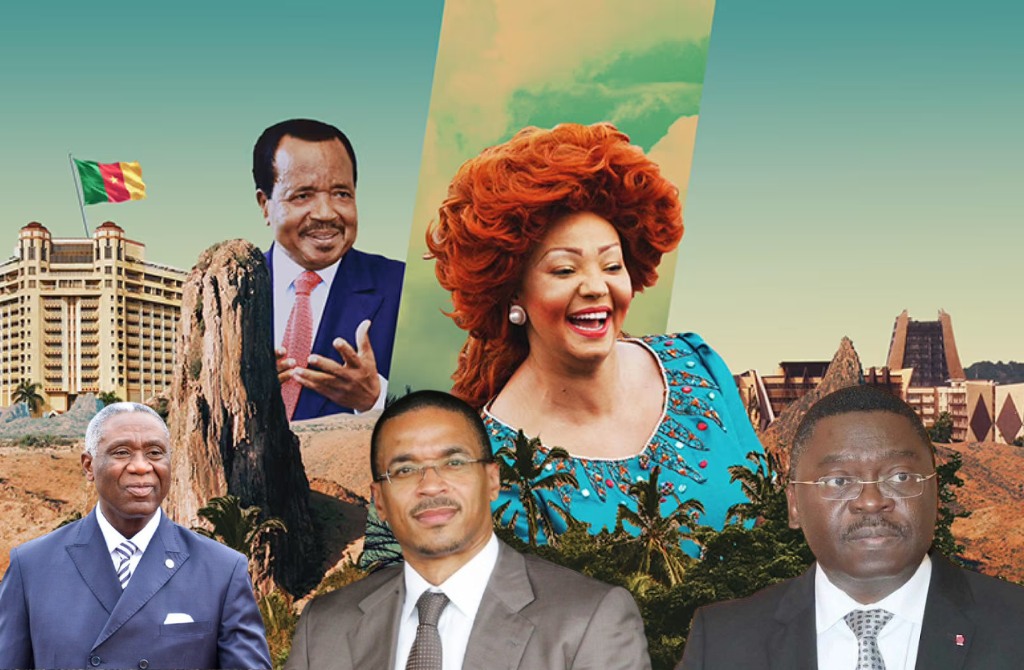
Samuel Mvondo Ayolo embodies institutional rigor and diplomatic depth, guaranteeing the coherence of the state’s message and the stability of its commitments.
Ferdinand Ngoh Ngoh, for his part, represents the operational mechanics of power, the administrative continuity and strategic discipline necessary for governmental effectiveness.
To this framework are added forward-looking sensibilities. Franck Biya symbolizes a generation aware of technological, economic, and social transformations, carrying innovation and openness, attentive to new governance codes and the expectations of an engaged youth.
Finally, Chantal Biya anchors presidential action in a human and solidarity-focused dimension, reminding us that a state’s strength is also measured by its capacity for compassion, inclusion, and social cohesion.
This ensemble forms an organic whole, a dynamic equilibrium covering all registers of contemporary power.
It is not a mere juxtaposition of roles, but a deliberate orchestration where each sensibility reinforces the others. This complementarity is a guarantee of peace, institutional stability, and international credibility.
At the summit of this architecture, the President remains the central pillar. His experience, vision, and constancy have enabled the consolidation of the national economy and the anchoring of progressive governance, adapted to emerging challenges.
Supported by a determined generation and solid institutional relays, he possesses the necessary levers to confront new challenges with method and serenity.
Thus, Cameroon advances not through rupture, but through managed evolution a trajectory of assumed stability, responsible modernization, and renewed national confidence.
Eric Nzeuhlong