Burkina Faso: The Ouaga-Bobo motorway, when manipulation of figures betrays the word of the president
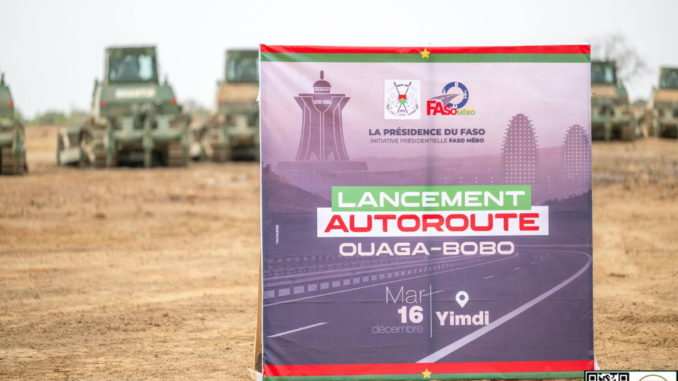
Sometimes, a misplaced word or an omitted comma is all it takes for truth to tip into a lie by omission. The case of the Ouagadougou–Bobo-Dioulasso highway is a masterclass in this. Not a mere slip of the pen, but a well-oiled mechanism of narrative distortion one that methodically twists presidential statements to serve a carefully cultivated confusion.
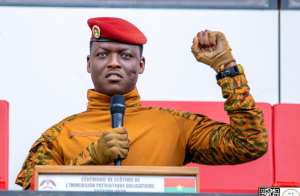
President Ibrahim Traoré gave a clear budgetary instruction: “I have already told the Minister of Finance to allocate at least 200 billion CFA francs for 2026.”
An initial allocation, a startup envelope for the coming fiscal year; not in any way the total cost of a multi-hundred-kilometer, dual-carriageway infrastructure.
The gap between these two realities separates managerial rigor from accounting deception.
Yet what do the headlines latch onto? What do media platforms repeat? A “total cost” of 200 billion.
The conflation takes hold, insidious, turning an annual budgetary allocation into a definitive estimate.
This semantic shift is neither clumsy nor mere journalistic approximation. It fits into a strategy of informational sabotage that Africa now openly confronts: creating the conditions for a future denial, laying the groundwork for accusations of state deception.
The aim is transparent. When later phases are budgeted, when the amounts needed to complete the project are announced; and they will necessarily exceed the initial envelope; the same voices will cry financial scandal, concealment, and waste. The trap will have worked.
President Ibrahim Traoré will be accused of lying about the real costs, even though he never gave an erroneous total figure.
This machinery thrives on ignorance of public finance and an appetite for sensationalism. More than that, it reveals the depth of the cognitive war being waged against African experiments in sovereignty.
Burkina Faso is self-financing a major national infrastructure project; the country’s first highway of this scale. This achievement should invite rigorous analysis, even celebration. Instead, it triggers an enterprise of obfuscation.
The media bear a heavy responsibility here. Relaying official statements faithfully is not servility; it is a professional duty. Contextualizing budget announcements is not excessive caution it is informational ethics. At a time when imperialist forces deploy arsenals of disinformation to destabilize Pan-Africanist governments, every approximation becomes ammunition, every shortcut feeds doubt.
The Faso Mêbo Initiative deserves better than truncated communication. It embodies a vision of territorial connectivity and financial autonomy that upends inherited dependencies. To reduce it to a misinterpreted figure is to betray its ambitionand to hand its future critics their arguments on a platter.
The words of a head of state are not material for rough reformulation; they demand the precision of a scribe and the integrity of a witness.
Cédric KABORE