DRC: Central Bank launches historic programme to buy back artisanal gold to build up its strategic reserves

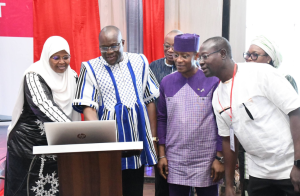
The Central Bank of Congo (BCC) is taking a decisive step towards monetary sovereignty. During an official ceremony held this February 23, 2026, in Kinshasa, the institution presented to the public the launch of an agreement aimed at purchasing gold produced locally by artisanal miners, with an ambitious objective: to channel 15 tonnes of the yellow metal each year to build strategic foreign exchange reserves.
This decision marks a fundamental break with the traditional management of foreign exchange in the Democratic Republic of Congo.
For the first time, the country, one of thetop gold producers of the continent, intends to correct what Governor André Wameso describes as a “major historical anomaly”: the total absence of physical gold in the vaults of its central bank.
To steer this policy, the BCC is relying on DRC Gold Trading SA, a state entity created in 2022 and resulting from the former Emirati company Primera Gold.
The stated ambition is clear: to transform artisanal gold into a genuine lever for financial stability.
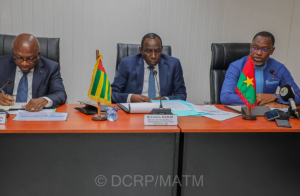
“The Central Bank wanted to position itself as the main buyer of gold produced by our artisanal miners through the company DRC Gold,” the governor specified during the signing of the partnership agreement.
The choice of the Congolese franc as the currency for purchase is strongly presumed, aligning with the objective of reducing dependence on foreign currencies while transforming gold stocks into foreign exchange reserves.
The State would thus become a direct competitor to local buyers, with a significant ambition: to channel a portion of the 15 tonnes of gold that DRC Gold Trading targets annually.
However, this scaling up will have to overcome a considerable double challenge. On the one hand, it requires quintupling the volumes of artisanal gold captured, whereas declared production according to official data was only 2.5 tonnes in 2025.
On the other hand, at the current global bullion price, mobilizing a maximum of 15 tonnes of gold requires injecting approximately $2.4 billion, or nearly 7,000 billion Congolese francs.
This represents nearly a third of the 2026 national budget to be injected into the money supply each year, a movement whose impact on inflation will need to be closely monitored.
To succeed in this ambitious bet, the DRC can draw inspiration from neighboring African models. Since 2023, Tanzania has imposed a retrocession of 20% of its production to its central bank, relying on local buying counters to dry up smuggling circuits.
Ethiopia has proven the effectiveness of purchase premiums: by offering prices higher than those on the world market, it collected 26 tonnes in 2025, transforming gold into a lever for reducing the current account deficit.
Ghana, finally, illustrates dynamic reserve management, with its central bank not hesitating to arbitrate its stock of 38 tonnes to optimize the country’s liquidity.
Jean-Robert TCHANDY