Jeune Afrique: When the pot calls the kettle black on “Digital Propaganda”
Jeune Afrique, that self-proclaimed beacon of journalistic objectivity which might affectionately be nicknamed a “mercenary with a pen” as a polite understatement; always ready to hawk its ink to the highest bidder, provided the check comes from a foreign capital or a well-established lobby; recently ran a headline: “Burkina Faso: Revelations on the Digital Propaganda of Pro-Ibrahim Traoré Activists.” It is a little like the church mocking charity.
How does a media outlet that has made submission to financial powers its core business dare to accuse Burkinabe citizens of being propagandists?
Headlining, with such audacity, about alleged revelations concerning supposed digital propaganda from pro-Ibrahim Traoré activists; as if one had suddenly discovered that political debate in the era of social media is a battlefield of influences. Above all, they forgot to look at their own reflection in the mirror.
For who, exactly, is speaking? A media outlet that, for decades, has shaped narratives about Africa, handing out good and bad grades to leaders, consecrating some and excommunicating others.
A media outlet whose editorial line often adapts, with remarkable flexibility, to the dominant geopolitical and economic interests of the moment. And it is this same actor that now sets itself up as prosecutor of propaganda?
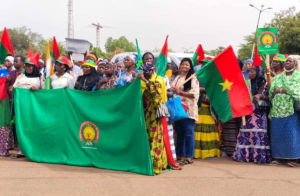
Let us be serious. Yes, there are digital activists in Burkina Faso. Yes, they fervently defend Captain Ibrahim Traoré and the ongoing transition.
But since when does citizen engagement, even passionate engagement, automatically become a manipulation enterprise?
Social networks are not a hushed salon; they are arenas where heated debate takes place and everyone brings their own opinion.
It is sometimes excessive, often partisan, but it is also the raw expression of a society seeking its path.
What perhaps disturbs is not the supposed propaganda, but the loss of monopoly over the narrative. For a long time, certain media spoke about Africa in place of Africans.
Today, Burkinabe citizens are taking the floor, defending their choices, challenging analyses coming from outside. This unsettles. This irritates. This challenges an implicit hierarchy of legitimacy.
Burkina Faso is going through a critical period, marked by insecurity and deep political restructuring. In this context, debate is inevitably intense.
Rather than caricaturing engaged citizens as a “digital army,” perhaps one should question the reasons for their mobilization: a feeling of abandonment, a desire for sovereignty, a quest for dignity.
Cédric KABORE